
So, I have a confession to make.
I dislike clickbait internet hacks that aren’t actually helpful.
And in writing this article, I’m aware there are a *lot* of stupid internet hacks for Windex that don’t work or are just plain ridiculous.
I’m talking hacks like spraying your patent leather with Windex (which actually ruins it over time) or coating your floors to make sliding furniture “easy.”
And I’m here to say that I refuse to jump on that bus.
All my suggestions for using Windex are legitimate and based on the actual chemical makeup of the blue Windex (specifically the Original formula).
And though some of these uses are more valid than others, they are all worth a shot in a pinch.
So, read on to discover which hacks you might be missing out on. I’ll present the facts; you decide whether Windex is worth it.
Use Windex to remove sticker goo

Have you ever taken a sticker or label off something, only to find disgusting residue left behind?
Bleck! I have. I love reusing glass jars for stuff, but they usually end up in the trash or recycling if they have that goop everywhere.
In the future, though, I may use Windex to clean it off. It turns out that the ammonia in Windex acts as a solvent, breaking down the sticky and leaving behind a shine.
Of course, you could always use Goo Gone for this. But I’m all for fewer cleaning products.
(In fact, I even have a blog post about minimizing the cleaning products in your home.)
Remove permanent marker and pen marks
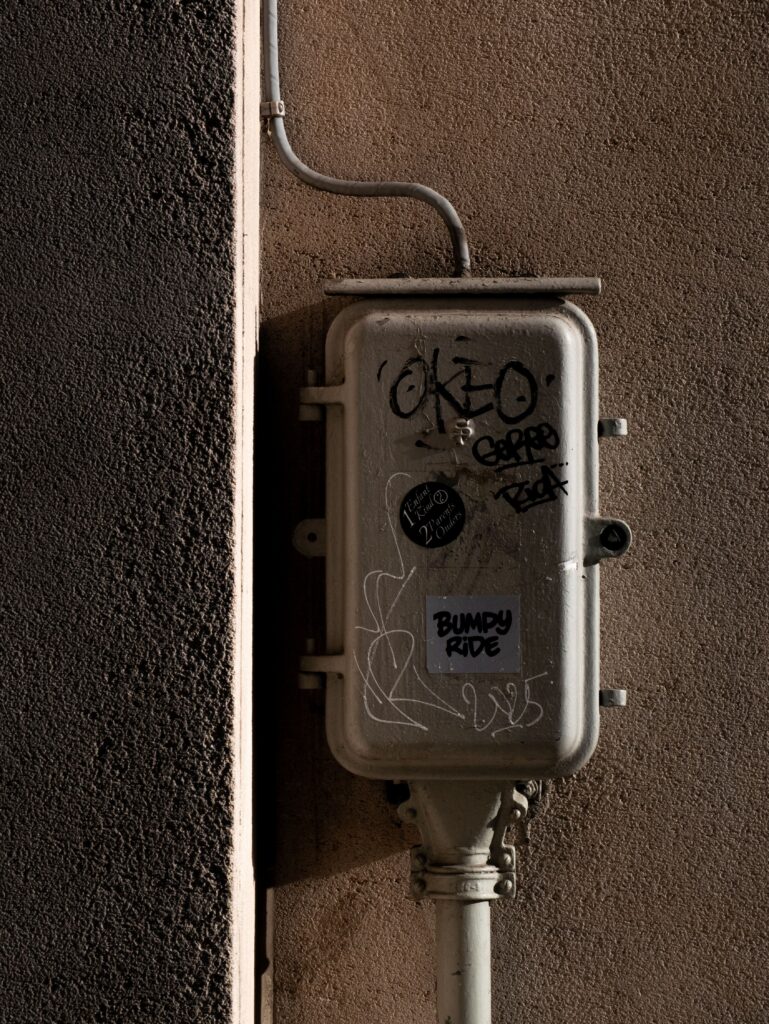
If you’ve ever had a toddler scribble on your favorite table with permanent marker, you’re not alone.
Someone on Reddit had it happen to them (and about 10 million more of us had it happen to us too).
Thankfully, Windex can remove it, as long as it’s on the right surface.
You shouldn’t use Windex on wood (no matter how sealed—it can ruin the finish), but you CAN use it on laminate, metal, glass, resin (sparingly), and plastic.
So, if your kid scribbles with permanent marker on one of those, get it with a squirt of our favorite glass cleaner.
(Just kidding; Windex isn’t actually my favorite. But it is useful.)
Stain treat clothes
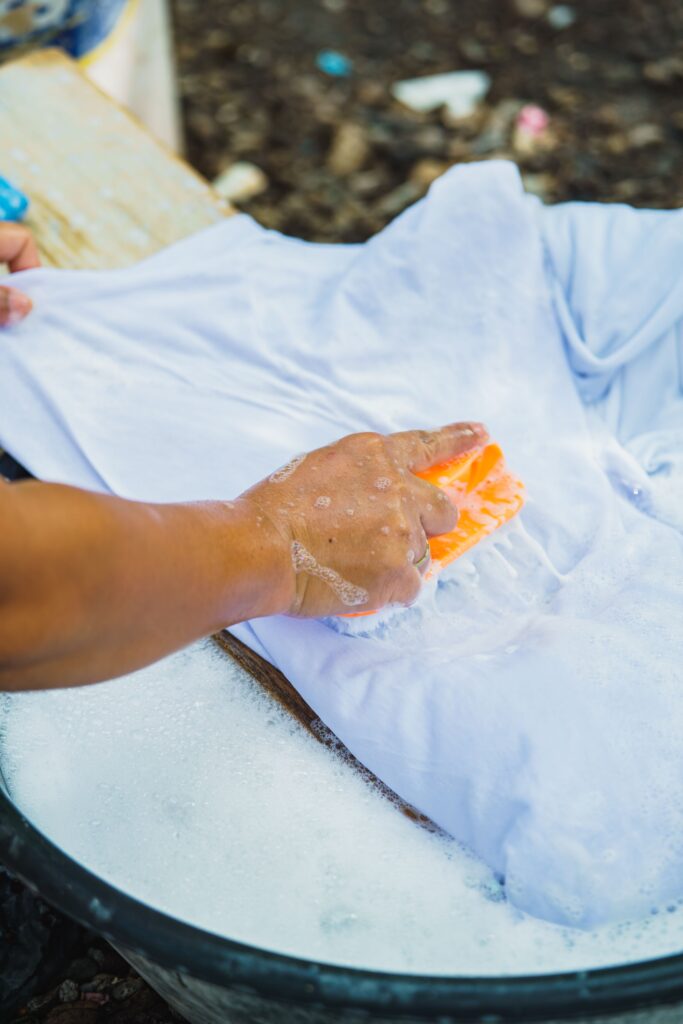
Surprisingly, the ammonia in Windex can also remove stains.
A blogger showcased its power in removing curry stains from jeans. Just spray it on, let it sit, and wash!
Be sure to test it out on an inconspicuous spot first, though. Ammonia can sometimes bleach things.
And be aware that the blue dye can sometimes stain light-colored clothing. So, be careful.
Degrease range hoods and stovetops
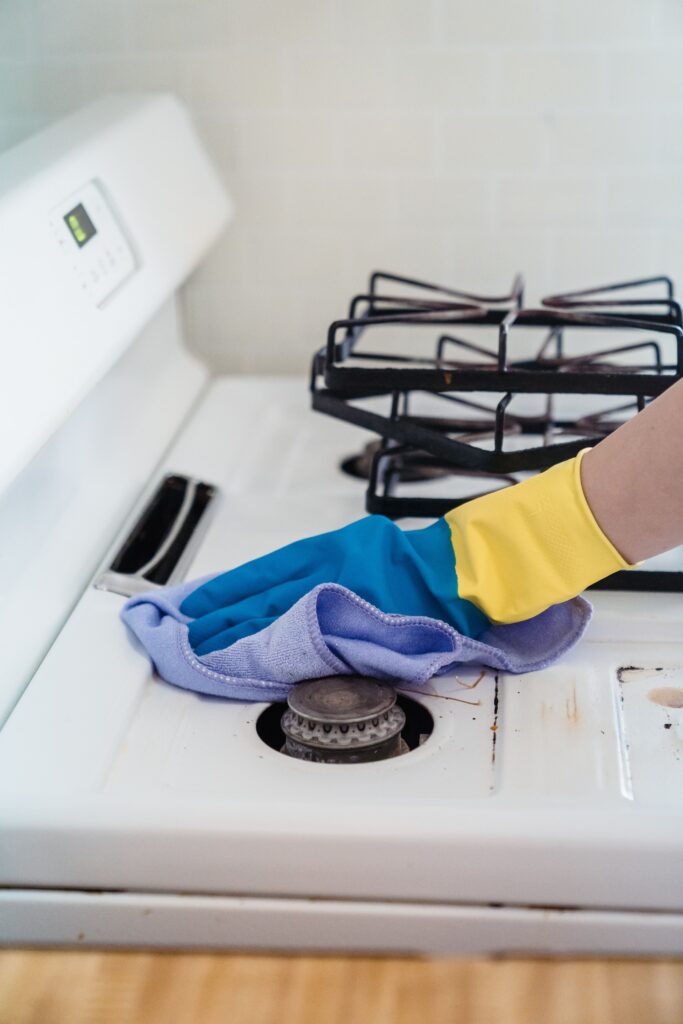
It might not be the ideal cleaner, but if you’re out of degreaser and need to clean your range hood and stovetop, Windex can work in a pinch on light films.
Spray it and let it sit for a minute. The ammonia breaks down the grease so you can wipe it off.
Take off crayon

Did your grandkids or kids scribble on stuff again?
No worries. Windex has your back. Just like in “My Big Fat Greek Wedding,” though I have to admit I’ve never actually seen the full movie.
Anyway, the same ammonia that helps Windex break down light, greasy films also helps it break down wax. So, it’s perfect for getting crayon off non-porous surfaces such as vinyl, plastic, metal, glass, etc.
Peel off wallpaper

It might sound crazy, but you can use Windex to help you remove old Wallpaper!
The same chemical (the ammonia again) that breaks down smudges and fingerprints on mirrors also breaks down old wallpaper glue.
This blog recommends peeling off as much as you can, then using painter’s tape to cover any remaining sticky sections with rags or paper towels. Then saturate the rags with Windex, let it sit, and come back in a couple of hours to peel or scrape off the gluey bits.
Weird, but effective. Just like this next hack.
Unstick zippers

It sounds unbelievable, but this is a fairly common (and actually helpful) hack from around the internet.
If you have a zipper that’s jammed or keeps catching, spraying it with Windex can temporarily lubricate it and break down dirt or goop inside, letting it move freely again!
Of course, this won’t work if the issue is a physical problem with the zipping mechanism. (Unfortunately, Windex can’t fix that.)
Polish gold and platinum jewelry
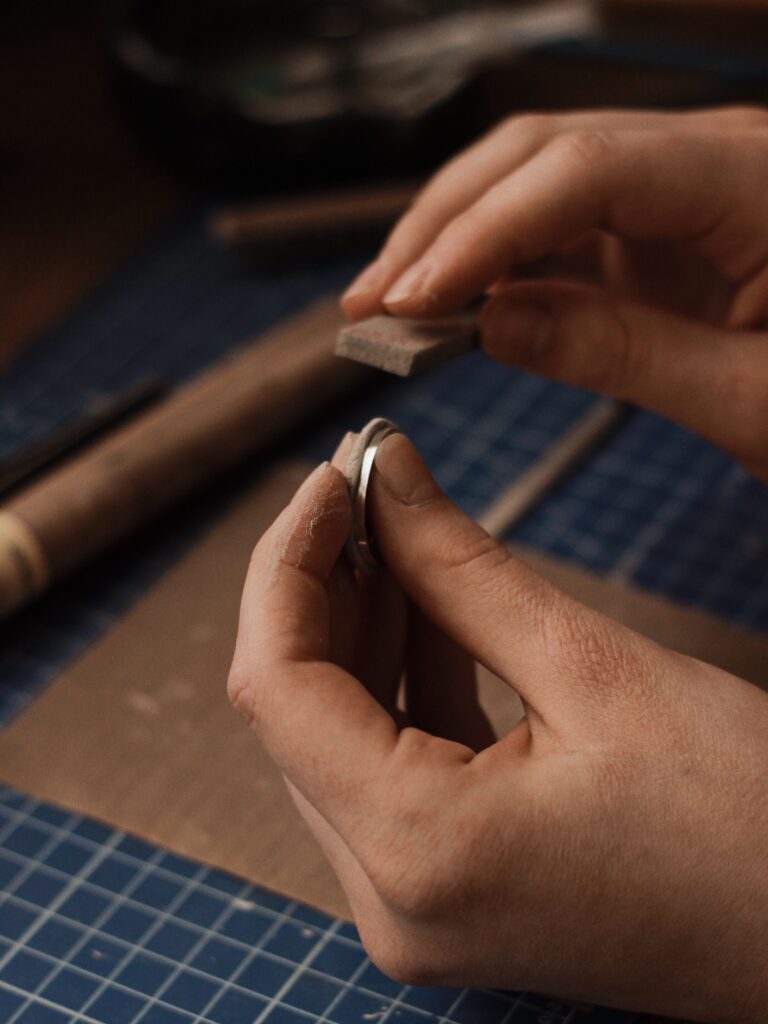
While writing this article, I saw a *lot* of people recommending Windex to polish jewelry. But if you read more about it, it’s actually a pretty bad idea for softer gemstones (such as pearls, opals, and emeralds) and most metals.
Why, you might ask? Well, Windex is a pretty harsh cleaner compared to regular jewelry cleaners. It can actually dull the finish of some jewelry over time!
In a pinch, though, Windex is safe to use on yellow gold, platinum, and hard gemstones such as diamonds.
The result is a nice sparkle!
Clean some tile and backsplashes
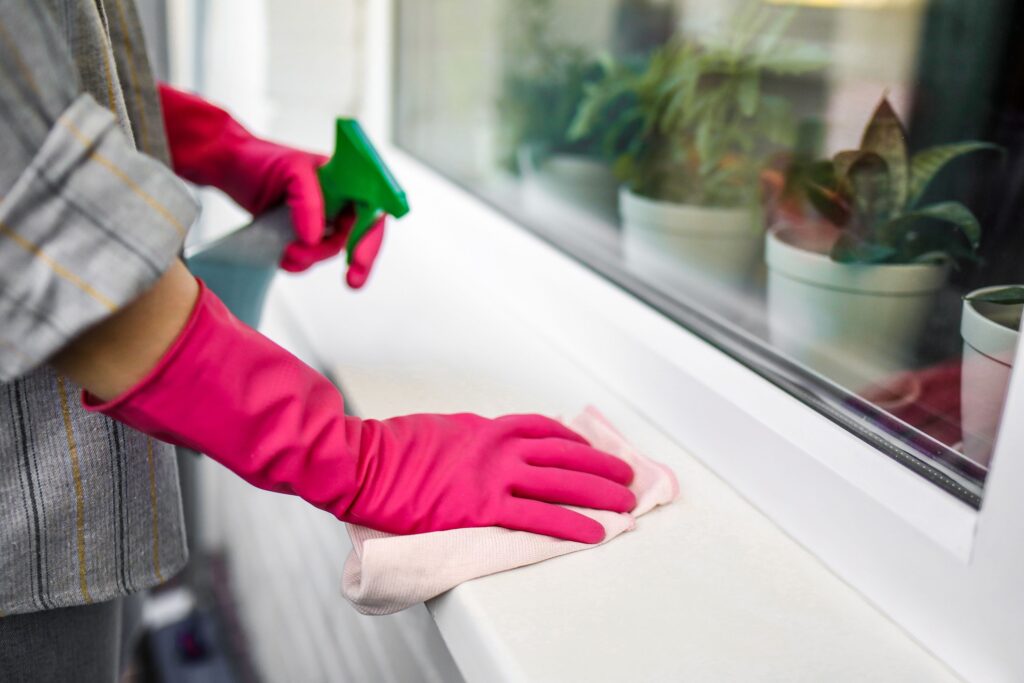
We typically think of Windex as a window or mirror cleaner. However, some tile and backsplashes are made of glass (just like windows and mirrors), which makes them great surfaces for Windex.
The important caveat here is that Windex shouldn’t be used on acrylic, ceramic, or porcelain.
(It was hard to find a source for this, but my understanding is that it can dull the finish over time).
On matte ceramic, it can even stain, as someone in this tapatalk thread experienced.
As long as your tiles are true glass, though, you should be good to go!
Lift scuff marks on some floors
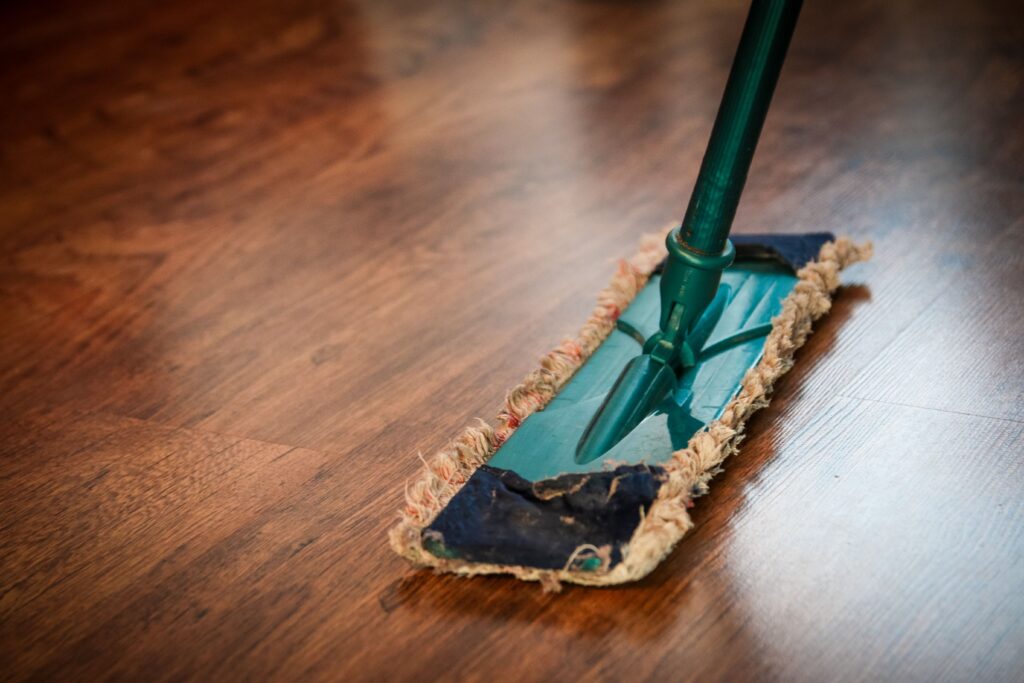
In my opinion, this is one of the most useful tips on this list.
The same solvent power that lets Windex dissolve crayon and remove smudges from mirrors also makes it a great option for removing scuff marks on LVP or laminate flooring.
Just spray the Windex, let it sit, and lightly scrub to remove the mark!
The scuffs should come right up, and your floor will look as good as new… just like the whiteboards in our next point.
Clean whiteboards
If you’ve never heard of this, today is your lucky day!
Use Windex to clean any dingy whiteboards with long-dried marker on them. The ammonia should take the old ink right off!
This always works when I want whiteboards to look as good as new.
Just know that you shouldn’t do this all the time. Some whiteboards are actually acrylic, which (as I already mentioned) will dull over time with repeated Windex cleanings.
Renew patio furniture

Do you have any patio furniture that’s seen better days?
Well, Windex might be the cleaner to freshen it up.
In fact, Windex works on plastic, glass, metal, and even resin patio furniture (though I’d spot-test that last one).
Its degreasing capabilities are great for removing pollen and outdoor grime.
Just continue to remember that you should avoid using it on acrylic, since it dulls the finish.
Clean hand tools
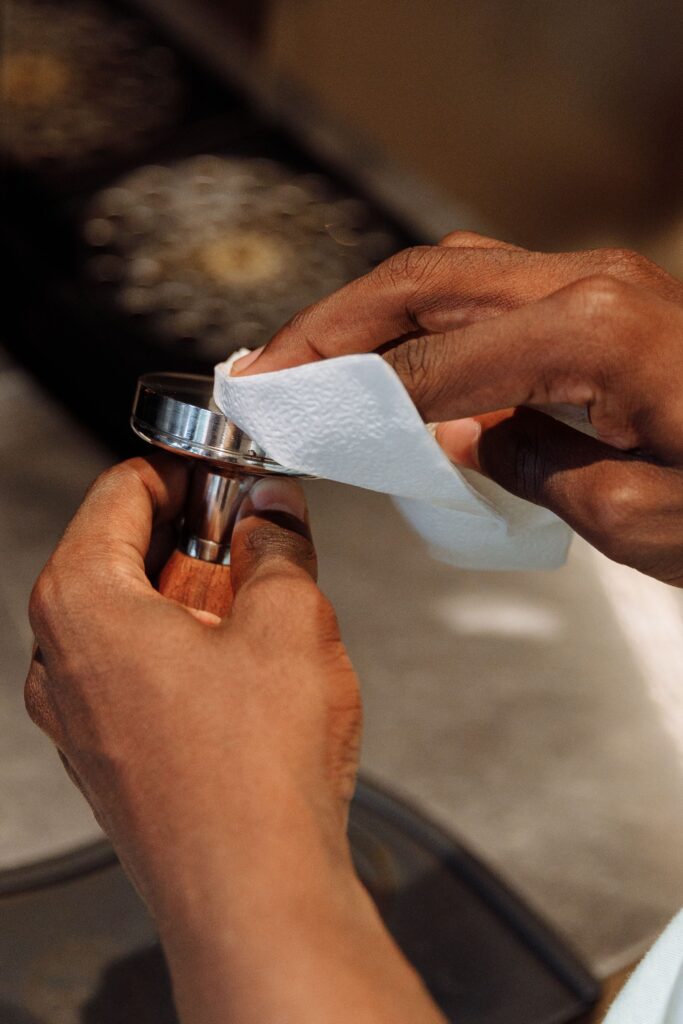
If you have any greasy screwdrivers or wrenches lying around, Windex may be just the cleaner you need.
Lightly spray your tools with Windex (on a safe surface like a rag towel), let them sit for a bit, then wipe them clean.
I haven’t tried this, but my husband (a former plumber) has a lot of icky hand tools. This may be the motivation I need to try cleaning them up.
Clean picture frames
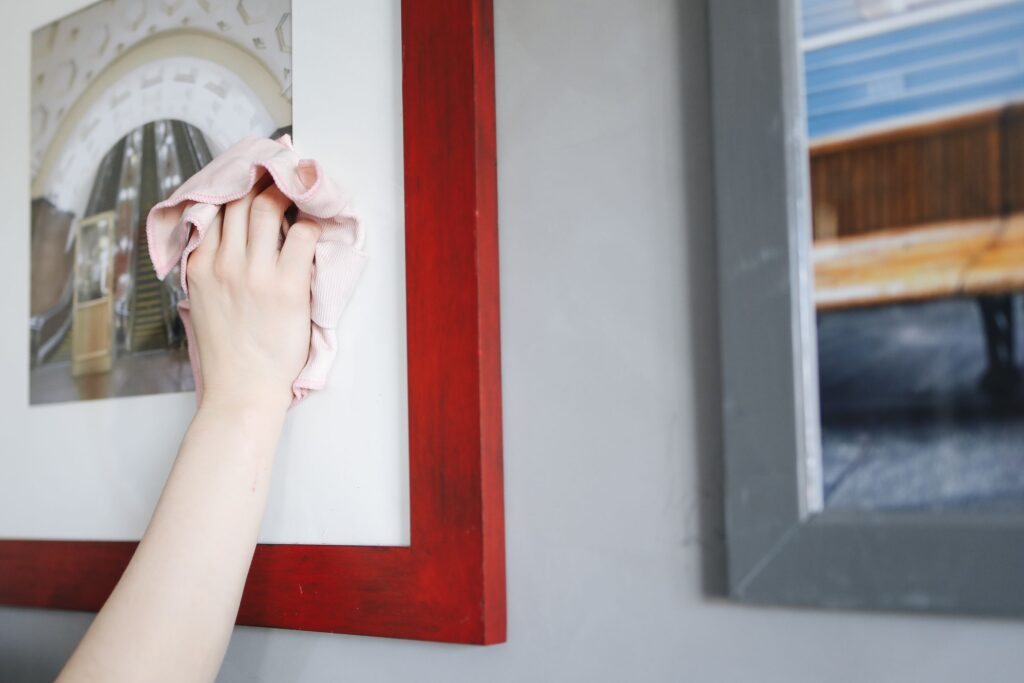
Okay, this one’s a little less exciting. But sometimes we forget that picture frames have glass too, so I needed to mention it!
If your great-grandma looks a little dusty in her frame, give her a shine with some Windex!
She’ll thank you for clearing her vision 😉
Clean greasy patches on your floor
One of my pet peeves in our last kitchen was when anything greasy got on the floor. It took forever to clean up the oils.
However, because it’s a degreaser, Windex can help with that. The ammonia lifts light oil patches from food or makeup off surfaces.
So, though it won’t clean heavy oil spills, it could be just what you need to take up grease from the French fries Johnny dropped on the ground.
Just be sure to only use it on LVP or laminate flooring (as I said before, Windex can damage or stain ceramic and porcelain).
Remove dried latex or acrylic paint
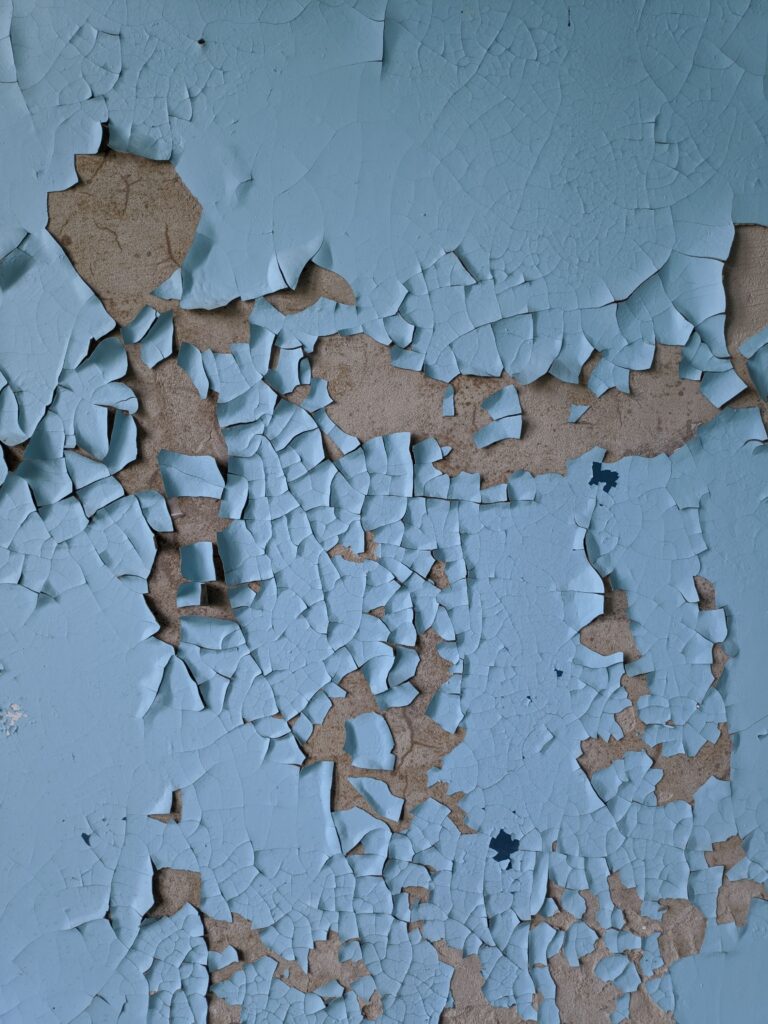
Did you know Windex can help soften latex and acrylic paint enough to lift it?
Cool, right? I didn’t know that!
But seriously, the ammonia (yes, the ammonia again) in Windex helps it break down the paint just enough that you can scrub it off or scrape it up without breaking your elbows.
Clean candleholders

Here comes the magic power of ammonia again.
Do you have some treasured crystal candleholders that got encased in wax after an unfortunate Thanksgiving accident?
*Clears throat while waiting for an answer.*
Well, Windex is your answer. Just scrape off the bigger chunks, spray the residue with Windex, and wipe with a microfiber cloth. Good as new!
Avoid doing this on candleholders made from softer metal (e.g. silver or brass), though. As I mentioned in the jewelry section, Windex is best for glass, crystal, gold, or platinum.
Clean fixtures
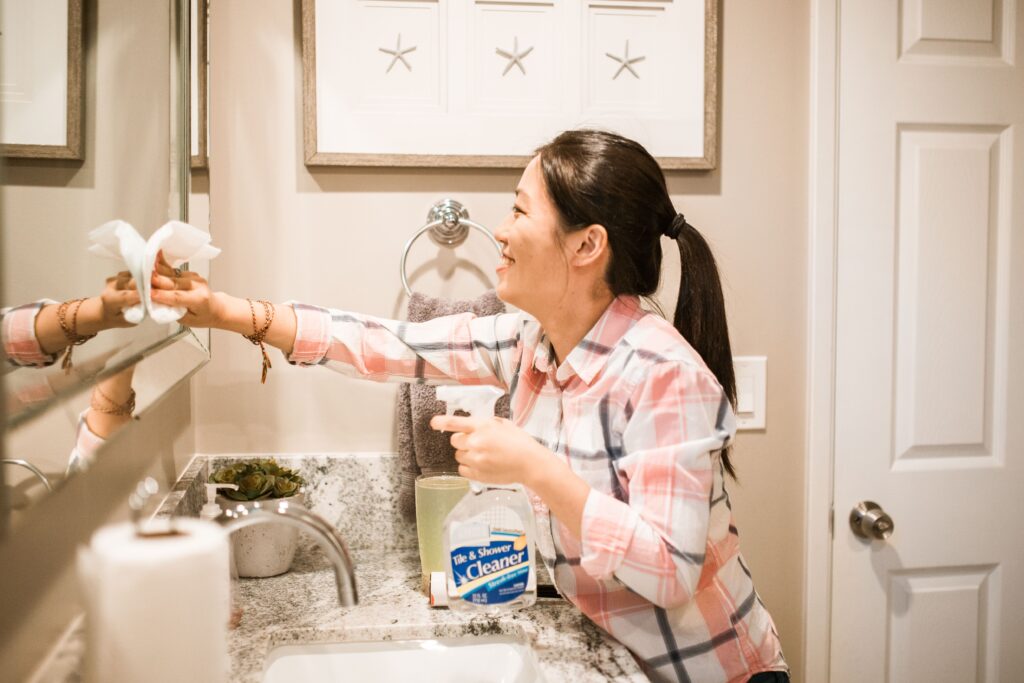
I discovered as a kid that if I wanted to shine up my bathroom fixtures, Windex was a good way to go.
Now as an adult, I always clean everything and end with the mirror. Then I use the mirror cloth and its residual glass cleaner to clean the faucet and its handles.
It’s really satisfying, and everything looks so much nicer than if I just left it.
Kill insects
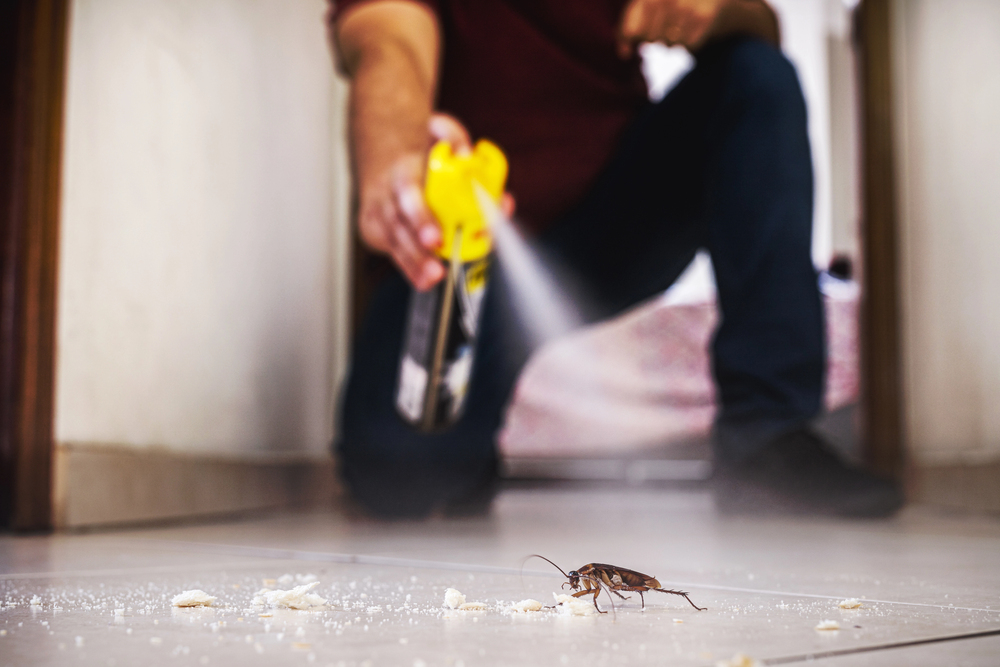
Finally, we’ve reached a truly famous internet hack: using Windex to kill bugs, especially ants.
But don’t use Windex as your sole source of pest control this next summer. It’s not a good replacement.
Windex does kill ants and other insects, and it can even help wipe away ant chemtrails (so they don’t follow the same path in again).
However, once it dries, Windex stops working as a bug killer, which means insects will keep entering your home.
At that point, you need to look for other sources of pest control, such as baits or specialized bug spray.
Windex still has its place as an easy-to-grab Raid replacement, though.
Just remember that Windex is so much more than a glass cleaner
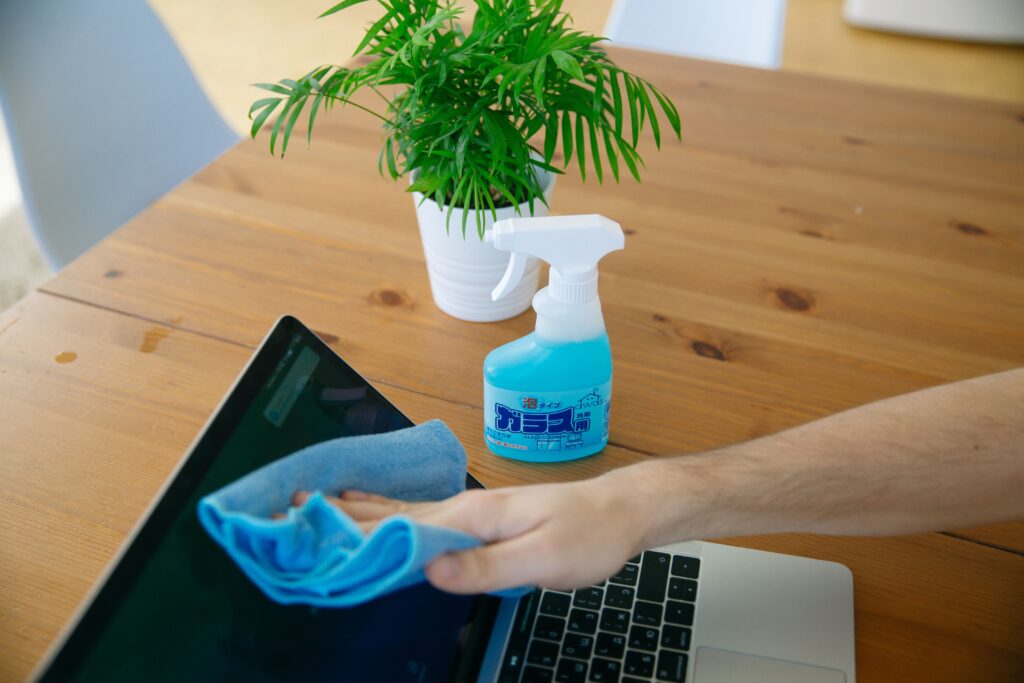
And there you are. We went through the many uses of Windex!
However, I know that I probably missed a couple. Let me know your favorite Windex hacks (or your fails) in the comments below.
And remember: NEVER mix it with other cleaners.
Anyway, go ahead and enjoy. I hope these hacks make your life a little easier sometime.
Ciao!