
We’re living in a technological revolution, and it’s re-wiring our lives.
Some of the effects are good.
And some of the effects are bad.
And, while I’m grateful for technology and its benefits, I’m concerned about how it’s impacting parenting.
More specifically, I didn’t realize the negative impact it had on my parenting as soon as I wish I had, so I’m writing this article as a wake up call for others.
So they don’t wake up later and regret how their phone or computer use hurt their kids.
Because while technology can help us as parents, it can also hinder us. And, we need to know the facts so we can use it responsibly.

It Made Me More Impulsive
A study done by Bournemouth University in 2023 linked increasing levels of ADHD traits with screen usage in adults.
The study collected data from 150 adults during the spring and summer of 2022 and showed how higher tech use leads to a marked rise in impulsivity and response inhibition.
Why is this important? Well, if you feel impulsive as a parent, you’re more likely to burst out in anger when your child acts up and make split-second parenting decisions you regret.
I experienced this first-hand. I realized that every time I scrolled social media for a while, I found myself getting snippy and impatient with my kids afterwards. And then I felt awful because that wasn’t the kind of parent I wanted to be.
And if you’ve read anything about parental self-regulation, you know that it’s vital for us as parents to control our emotions and think through our parenting solutions. This teaches our kids to regulate their own emotions in a healthy manner.
But, using your phone too much is making it harder for you to do that.

It Crippled My Working Memory
A landmark Canadian study that included 4,000 teens tied screen usage to inhibited working memory. Other studies cited in this article from Stanford Lifestyle Medicine suggest that the same is true in adults as well.
Why does that matter? Let me explain.
Working memory is what you use while you are completing a task. For example, if you are running from one room into another to grab an object, you are using your working memory to remember what you are going to get in the moment.
Working memory is vital to school, work, and personal success. It’s especially helpful for staying organized.
We need our working memory as parents so that we can handle all the tasks placed upon us (dinner, appointments, to-do lists, grocery shopping–you name it!).
And while forgetful parents aren’t necessarily bad parents, it hurts to realize at 2am that you forgot to read your child’s favorite book with them after dinner like you promised.
And, it’s safe to say overall that a dysfunctional working memory is going to make you less efficient and effective as a parent.
It Destroyed My Ability to Slow Down and Connect
On the YouTube Channel “Diary of a CEO,” the famous neuroscientist Wendy Suzuki discussed that using our phones gets us used to a constant, feel-good dopamine rush from pictures, satisfying dings, etc.
But when we’re used to the constant dopamine rush from our phones, we are less likely to seek out the natural dopamine releases our body is designed to need.
These natural, or “slow,” dopamine-releasing experiences include things such as exercising, getting out in the sun, and building relationships with others.
And if we as parents are the ones looking for a quick dopamine boost from our phones instead of from the things that matter, that’s a problem.
Because exercise and sunshine aside, we’re going to be missing out on building relationships with our kids. And we know that a weaker parent-child bond is tied to lower confidence, poorer brain development, and a decreased ability to form healthy relationships in life.
That sounds pretty bad because it is pretty bad. If you suspect your phone might be replacing your relationships with your family, it’s time to step it up and make sure you’re controlling your tech–and not the other way around.

It Fed Me Biased Content That Affected My Parenting (For Better or Worse)
Social Media can be helpful, and I enjoy getting helpful information and ideas from sites such as YouTube or Reddit.
But there are two problems with the information they give you:
- Social media can create echo chambers and you can miss out on other perspectives (this actually may be less of a problem with larger, more widely used platforms, but it’s still worth considering).
- Most of what’s on social media is, unfortunately, fake.
Let me focus on that second point for a second.
Most of what we see on social media is fake.
As a content creator, I’ve tried to make videos where my house was a mess.
And, ahem, it was hard.
Very hard.
I just couldn’t get past the personal barrier of “But what will people THINK?!”
And I know this is a struggle for others. Even people who want to portray “real life” on social media end up portraying “reel” life on some level instead.
And at best that skews our perspective of how well we’re doing and what we should focus on as parents.
At worst it can lead us to make bad or unsafe parenting decisions based on faulty information.
If you’re curious to see examples of dishonesty or blatant misinformation shared by influencers, Hannah Alonzo has a great YouTube Channel about this. I don’t necessarily agree with all of her assessments, but I do think her videos provide an excellent perspective on why we can’t always trust influencers and social media.
We as parents need to be cautious and aware of the disconnection between portrayal and reality online. It’s important to do our own research and not just take the word of a trend or a famous person.
That way we can build successful lives based on good information–and help our children do the same.
It Was Doing All of This (And Possibly Worse) to My Kids Too
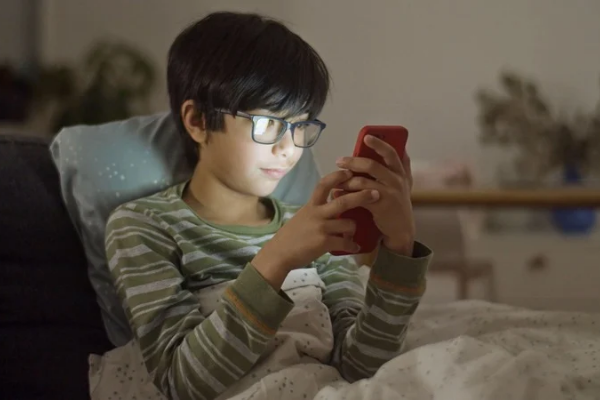
If screens and media can cause issues in adults with impulsivity, memory, connection building, and our outlook on life . . . you can bet they’re doing all that to our kids too.
In fact, Dr. Nicholas Kardaras, an Ivy-league educated psychologist who’s examined what tech does to our brains for over a decade, makes the argument that screens today are as addictive as Heroin for children (a TERRIFYING thought).
And if you’ve ever imagined parenting a mini heroin addict, well, that sounds . . . Not easy.
I’m still not as good about screens as I want to be. But I do know I’ve noticed positive differences in regulation and connection in my kids as I’ve worked to reduce tech time.
It’s likely worth trying a digital detox in your home to see how it could help your kids out.

Technology Might Not Be All It’s Wired Up to Be
We live in a world that’s constantly dissolving the boundaries between reality and technology. AI and living bots are the next big thing. Who knows how long it will be before we can’t tell robots and real humans apart?
But with great power comes great responsibility. The more the internet and tech expand, the more we need to understand their impacts on us and our children.
If you’re interested in further resources to understand the impact of tech on your family, I highly recommend Dr. Kardaras’ book, Glow Kids, which is available on Amazon.
And if you want to take it a step further and explore a simpler phone for your kids or yourself, check out Light Phones. They’re a company dedicated to making simple, unaddicting devices that serve you (not the other way around).
Good luck out there on the battlefield, fellow parents.