Are you afraid of cognitive decline?
I am. And roughly 44% of U.S. adults worry about it too.
But the good news is that we have some control over our personal outcome.
We know that factors such as stress, sleep deprivation, poor nutrition, and mental health disorders all contribute to an unhealthy brain, while leisure activities do the opposite.
In fact, studies show that social, cognitive, and physical leisure activities help reduce our risk down the road of having Alzheimer’s and dementia.
Because while we can’t control the future, we can control our hobbies. And, we can pick ones that will do us good.
So, here’s a list of awesome pastimes to make a mind of difference for you.
Some are quite niche, and some more generic, but there should be something for everybody!
Electronics Deconstruction (Make it a regular get-together!)

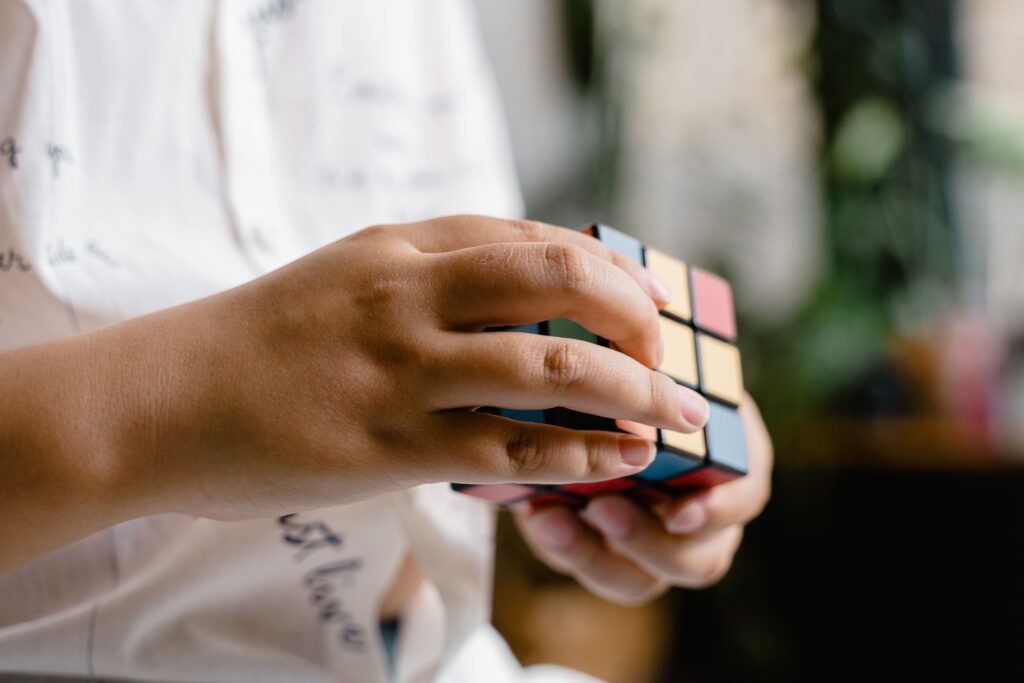
This is literally what it sounds like: deconstruct old electronics at your house to see how they work.
It’s an excellent hobby for your mind because it takes a lot of puzzling and mental work which is great for brain health.
And if you want bonus points on the cognitive side, you can make it a club.
Social activities paired with mental hobbies help the mind even more than just the social or cognitive activities by themselves.
So, see what you and your friends can make when you tinker around. You might surprise yourselves!
Creative Writing

This is a hobby that several people close to me have taken up, and I think it’s a great one for mental health.
Literacy activities are shown to reduce dementia risk. And, creative writing itself is associated with improved memory, better mental clarity, increased attention span, and more.
So, if you decide to write a book, know that it will be great for your brain!
And, just FYI, I think that the Novel Factory is a great resource for doing this.
(I’m not an affiliate; I just think they’re neat.)
Embroidery
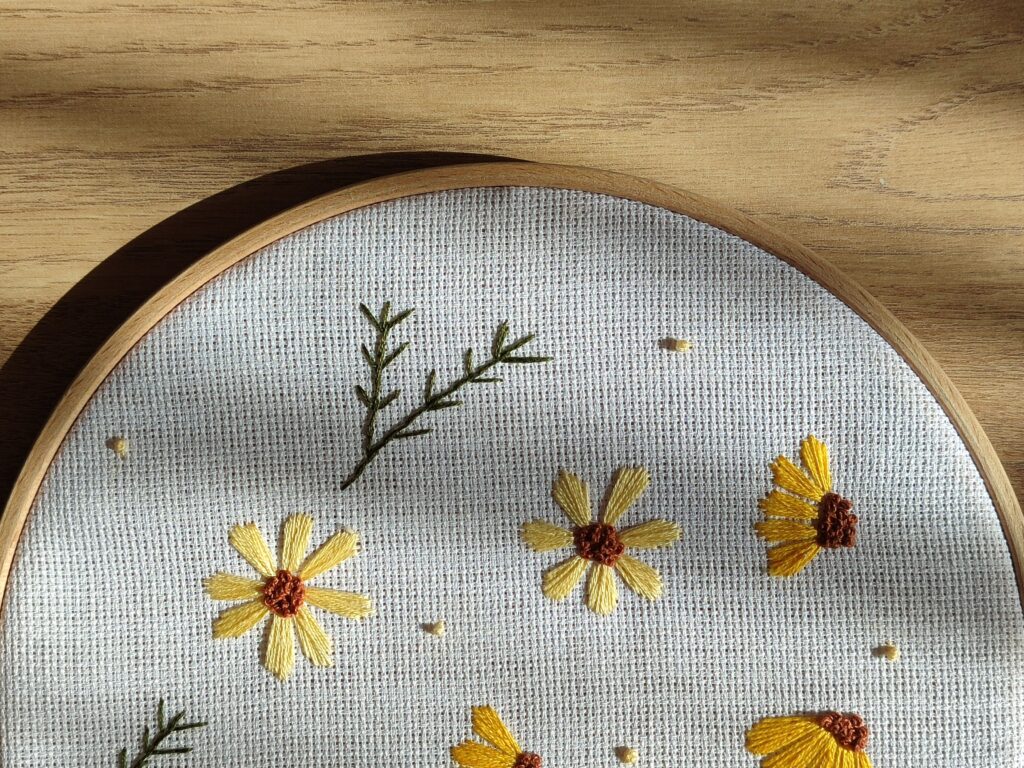
I actually got the idea for this one from a reddit thread about hobbies. It requires mental prowess to learn the different stitches, and even more mental work if you decide to create your own designs.
Plus, the user who suggested it pointed out that it’s a great skill for up-cycling and customizing stuff.
Pretty nice, if you ask me!
Indoor Gardening

Research shows that working with plants indoors reduces stress in young adults.
I’d wager that it does the same in older populations as well.
And when stress goes down, brain health improves long-term.
So, why not give it a try?
I think these self-watering pots would be really cute for raising some plants inside.
Learning a Language

As mentioned above, literacy activities help reduce dementia risk, and education classes are a literacy activity!
Plus, learning a new language can open doors to new social and even travel opportunities (see my point down below about travel).
I personally know Spanish and German conversationally, but I’d like to add Mandarin Chinese to my list at some point.
Playing a new Instrument

A study published by Kyoto University in 2025 followed people in their seventies who learned instruments for 4 months. Some stopped after the 4 month mark and switched to different hobbies, and some practiced consistently for the following 3 years.
At the end of the 3 years, those who had practiced consistently had better working memory, higher gray matter volume, and increased activity in their bilateral cerebellums.
Long story short? Learning and practicing an instrument is great for your mind—no matter how old you are.
It’s never too late to start!
Hiking With Friends

Physical activity is shown to reduce the risk of vascular dementia (and boost your brain health generally).
Social activities help with Alzheimer’s and all-cause dementia.
So, when you hike with friends, you’re combining physical and social activities, which gives your brain a massive boost.
Not to mention that hiking is also great for lowering blood pressure, improving sleep, and strengthening bones and muscles.
So, gather up some buddies, get going, and give your brain and body a dose of the great outdoors!
Tablet Weaving
You’ve probably heard of weaving, but have you heard of tablet weaving?
I hadn’t until I read about it in a reddit forum!
It turns out that it’s an ancient form of weaving that lets you make complex and beautiful patterns.
Check out this video for an overview:
And though artistic activities don’t reduce your dementia risk as much as literacy or mental activities like puzzles, they still help.
(And I suspect the mental rigor of tablet weaving might even qualify it as a “puzzle,” though of course I can’t prove anything.)
Doing Mental Games

One study done in Australia showed that literacy and mental health activities were more effective than creative or artistic activities at reducing dementia risk. (Though, artistic activities helped too.)
Among the mental health activities listed were crosswords and puzzles.
However, I would venture to guess that other forms of mental puzzles (Sudoku, mind-benders, etc.) would also be effective.
In fact, I highly recommend the Mind-Bender puzzles series by Anita Harnadek. They are a TON of fun to do, and books 6+ are great for adults (just read the reviews section).
Birdwatching

This is another activity that can get you moving while you exercise your brain.
Plus, if you spend time learning about the birds you watch, it becomes a literacy activity, which sharpens your mind even more!
Lots of avid birdwatchers recommend the Merlin Bird ID app as a great free resource for getting started!
(Here’s the apple store link for iPhone users).
Starting a Book Club

This is another great “combo” hobby that mixes a literacy with a social activity, reducing your risk of cognitive decline over time.
Plus, reading in general is associated with improved sleep and a longer life span (which is crazy!).
So, having a book club could actually be what saves your brain —and even your body—a little longer. Why not give it a try?
I highly recommend this book as the first read!
Tai Chi

Tai Chi is an ancient form of Chinese Exercise. It’s slow moving, and easy on the joints.
And, according to Harvard Medical School, it’s also great at stopping cognitive decline in its tracks. In fact, in one study they conducted, practicers of Tai Chi who were struggling with cognitive impairment were more than 5X less likely to progress to dementia after a year than their counterparts doing regular exercise.
That’s pretty powerful! I would give it a try. Just search YouTUbe for beginner Tai Chi exercises or check your local community center for classes.
Indoor Bouldering
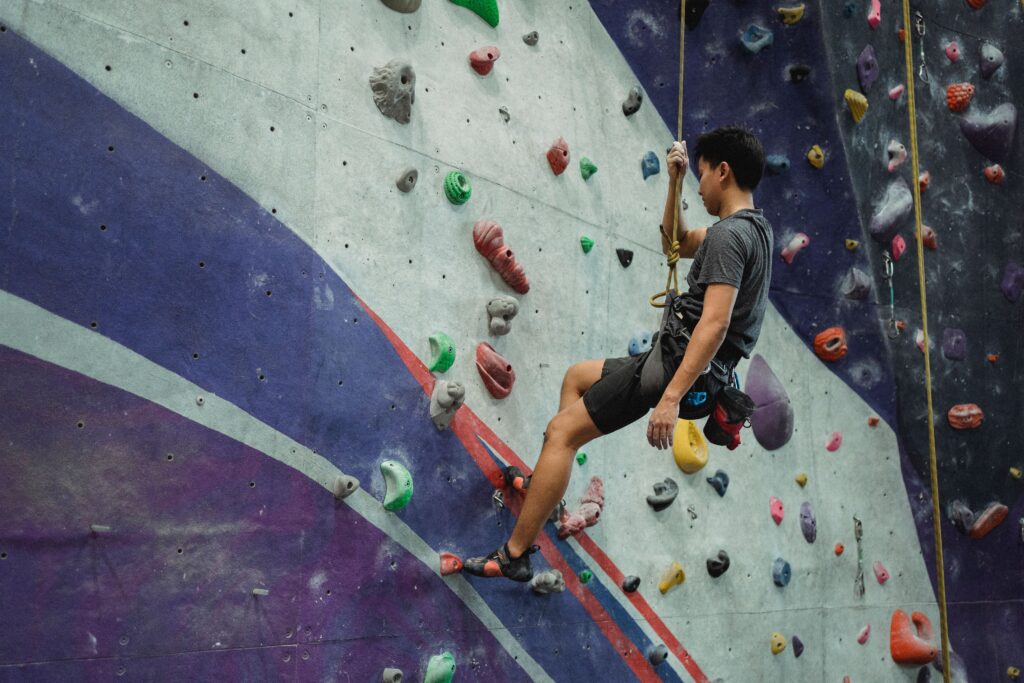
This is one hobby I’d like to do when my kids get a little older.
If you’re not familiar with it, indoor bouldering is basically rock climbing, but without safety ropes (though there are plenty of pads).
It’s a great mental workout because it takes careful planning and strategizing to plan climbing routes.
Plus, you’re also working out your body, which is awesome for your body in general.
Add to that the fact that climbing hobbies are proven to reduce depression . . . and we have ourselves a winner.!
Playing Strategy Games (E.g. Chess)

Among the other beneficial mental health activities mentioned in the Australian study up above were chess, cards, and some unknown “games.” (I wish they’d listed specifics.)
But, if I were to make an informed guess, I’d say that we’re talking games that take some mental effort to win.
So, maybe having a game night with your friends is just one more way you can keep your intellect going strong for years to come.
Traveling

Traveling offers opportunities for mental, social, and physical activity, which makes it excellent for keeping your brain sharp and active.
And, intriguingly, even just the variation in routine during travel is great for your brain because it helps it build new connections.
So, set out on an adventure!
And if you don’t have a ton of money, remember that traveling can be as simple as a day trip to the next town over to see a museum or monument.
Videogaming

This sounds really strange, and I had to think a bit about if I would put this one on my list.
But, I just kept coming across testimonials for it on Reddit (various users credited cognitive recovery after health incidents to gaming).
And, when I read more about it, I found that there is proof that video games can improve attention span, visuospatial skills, and sometimes working memory.
Based on the videogames used on Reddit (a lot of users recommended World of Warcraft), I’d say that you want to pick rich games that have a lot of variety, problem-solving, and social interaction.
In fact, the University of North Carolina published research in 2012 showing that World of Warcraft specifically helped with cognitive decline in older adults.
So, it might be worth checking out. (I haven’t ever played it. Though, I’m curious now.)
That being said, I think we should all be mindful of the dangers of video game addiction and excessive technology use.
Just use moderation. And, be sure to also develop other hobbies that get you outside and away from screens.
You Have More Control Over Your Brain Health Than You Thought
I hope you found a good hobby on that list for you. If not, keep searching!
I think my greatest takeaway from writing this article is that it’s less about the specific hobbies and more about continuing to live a full life, even when you get old.
Because a full life will naturally include a variety of healthy hobbies. And a combination of healthy hobbies is like super-sauce for your brain—there’s something about that synergy that keeps cognitive decline at bay.
So, here’s to living a full life.
(And here are some ideas for games to play with the people you love as a part of that).
I wish you the best!