I have a bad habit.
I like to wash random things in the washing machine.
Mostly, it’s because I’m lazy. Sometimes, it’s because I’m desperate.
But Pinterest said it would be smart for me to write an article about things that shouldn’t go in the washing machine… So here I am.
And I both like this article and kinda hate it. Because, to be honest with you, it’s nice to just toss things in and hope they’ll be okay (because a lot of the time they are).
But it’s also good to know what stuff I might straight up ruin (or may be slowly ruining).
So, I’m grateful for this list. And you might be too.
Now, let’s find out what you shouldn’t wash in the washing machine (and please stick around, because there are some really good ones in here).
Baseball caps

Have you ever machine-washed a baseball cap?
Full disclosure: I have… more than once.
In a couple of instances, it worked fine, and the hat came out on top.
The other times, the brim came out weirdly narrowed and curved, like it was made for someone with a face 4 inches wide.
Why, you might ask?
Well, many baseball caps have cardboard in the brim, and washing them in the washing machine makes them lose their shape. That’s why, according to NBC News, you’re supposed to hand wash them.
*Sigh.*
If you’re as bummed about that as I am, try a hat cage like this to help the hat hold its shape during the wash cycle.
It only works in front-load washers, but it just so happens to also be dishwasher-safe!
Bras and lingerie
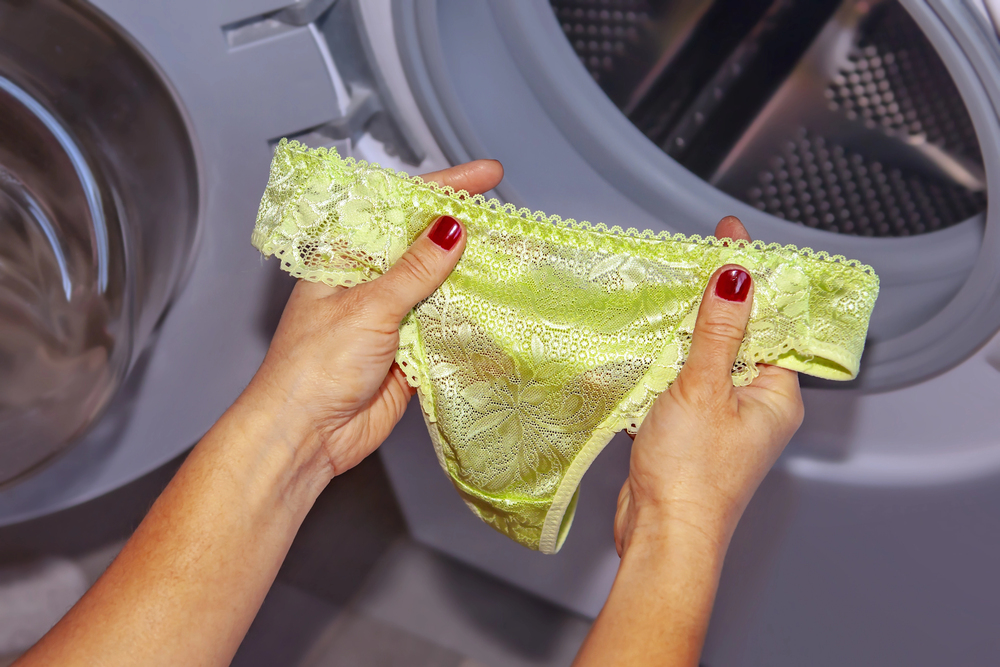
I was taught to wash my bras by hand as a teen, but I’ve failed to stick to that as an adult.
Recently, though, I noticed how quickly some of them fall apart… and I think this is a timely reminder to care for them better.
Bras and lingerie are best handwashed (especially if the bras have an underwire that could get bent out of shape or tear out of the cup).
If you really want to machine-wash them, though, use a mesh bag to protect them while washing and drying.
Weighted blankets
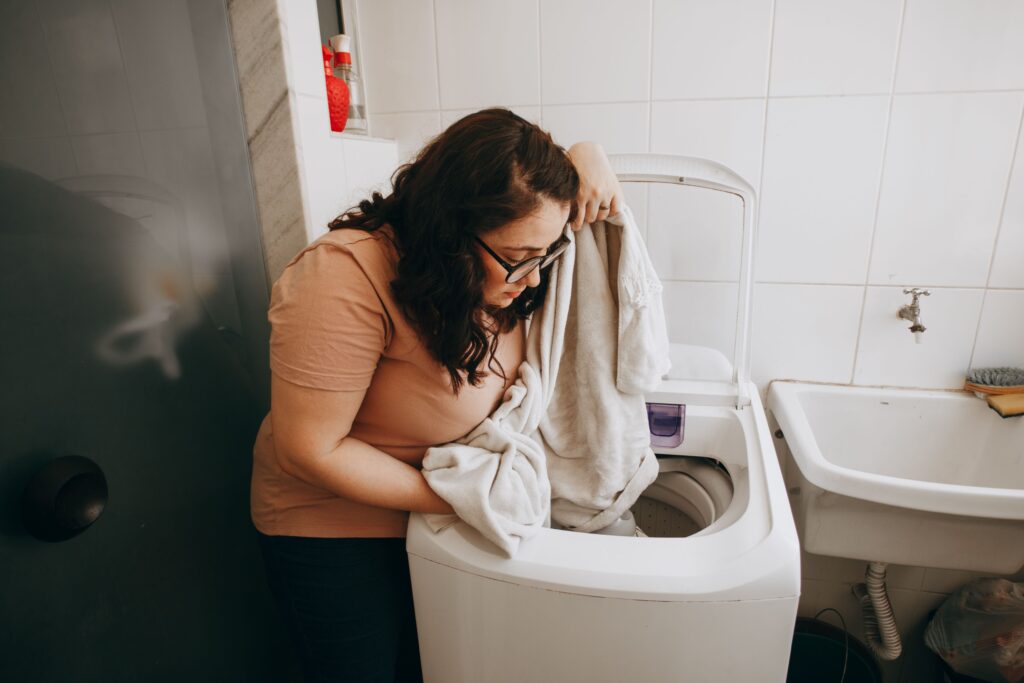
This category comes with a caveat: not all weighted blankets are non-machine washable.
In fact, some weighted blankets (especially those with plastic beads) can be tossed in the washer without a second thought.
But others require greater care. For example, some weighted blankets contain organic material (like sand, corn, beans, or rice) that moisture can ruin. These blankets should be dry-cleaned only (or very carefully spot-treated).
Other weighted blankets contain glass or metal beads and may be labeled hand-wash only.
And still others weigh too much to be safely washed in a washing machine without risking the machine itself. (Most home washers can only handle a weighted blanket of up to 15-20 lbs.) You’ll have to take those to the giant machines at the laundromat.
Long story short, check your labels and be wise.
Neckties
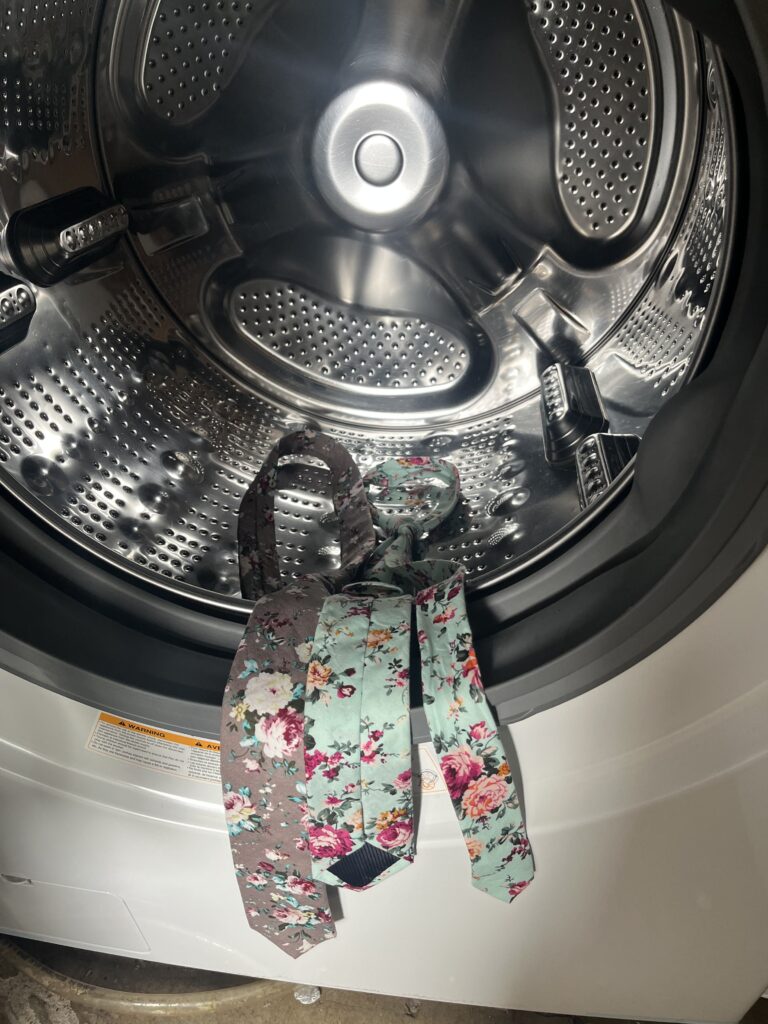
Okay, this also doesn’t apply to all neckties (unless you want to be extra picky.)
But basically, what I learned is that silk or wool ties shouldn’t be machine-washed.
(I had no idea about the wool ones. I’m pretty sure I’ve broken that rule. Whoops.)
Typically, they need to be either hand-washed or dry cleaned. Whoops!
Other kinds of ties can be hand-washed (for longevity) or machine-washed on a gentle cycle.
Just check your care labels to be sure.
Anything stained with gasoline or other flammable liquids
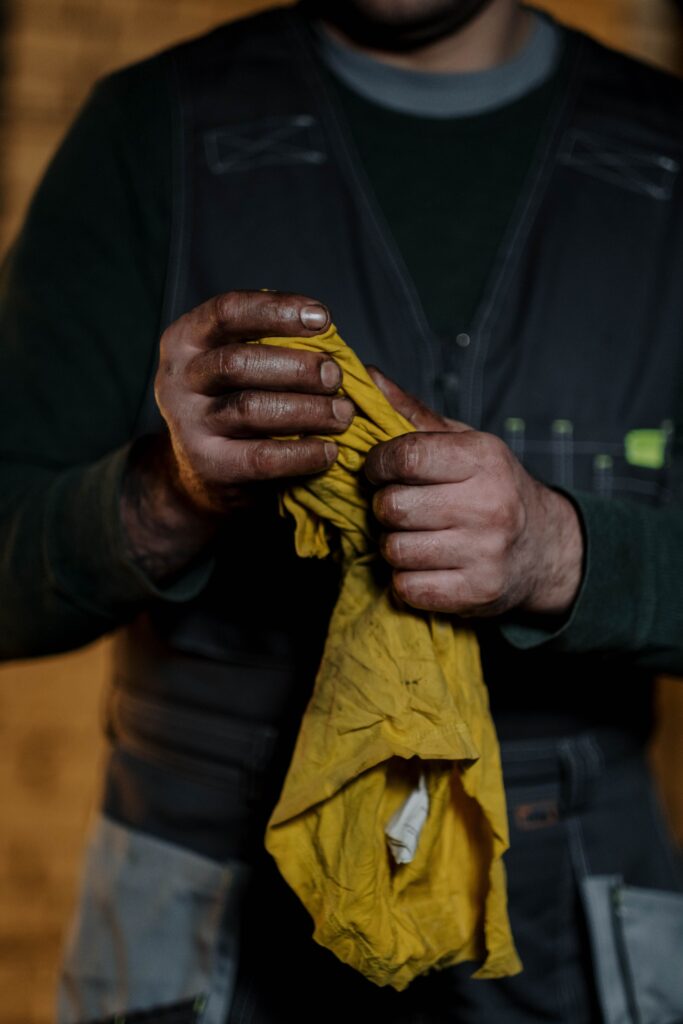
This was new to me.
I mean, I don’t get gasoline on my pants a whole lot (or ever, haha) but I do have plenty of dishrags with flammable grease on them.
And apparently, I’m not supposed to wash those.
Yeek. I’ve broken that rule a lot.
So, what should you do instead?
Well, first use water and detergent or dish soap to get as much of the flammable liquid out of the fabric as possible. Then wash it as directed.
Who knew?
Some swimwear
Yet again, this rule isn’t a “one and done deal.” But it applies enough that I felt like it should be on this list.
Apparently, professionals say swimsuits last longer when you rinse them in cold water after use and clean them by hand when needed.
I wish I’d done this with the last swimsuit I purchased, because the fabric was never the same again after I ran it through the washer once.
Extra heavy bedding
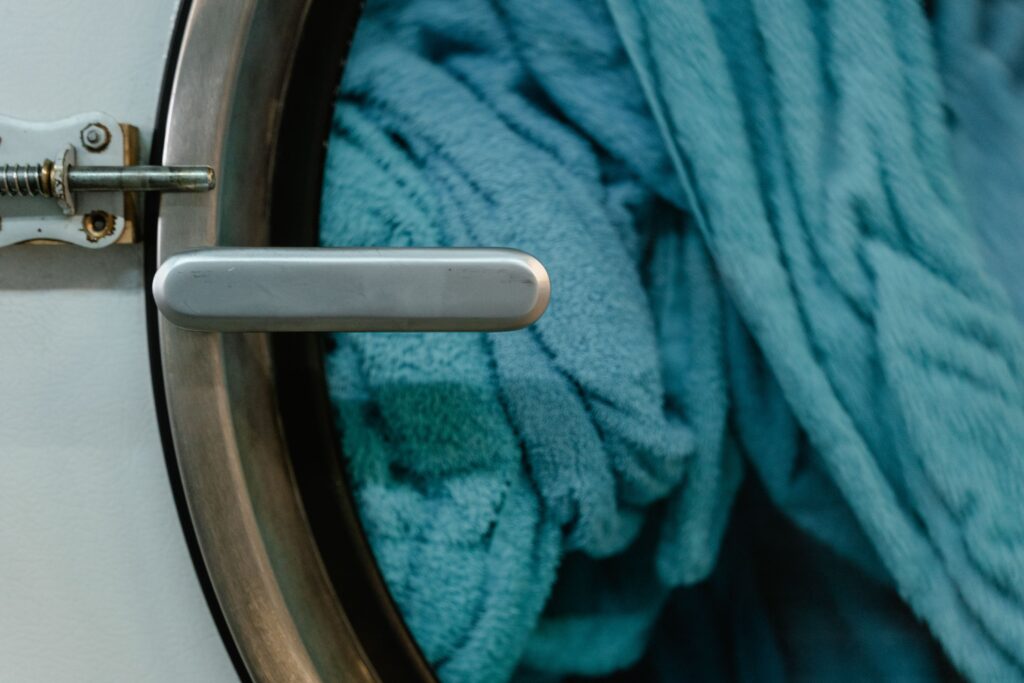
I can think of a number of occasions when I wanted to stuff a heavy comforter in the wash.
And truth be told, I kinda wondered if I should. But I did it anyway.
Thankfully, I don’t have to wonder anymore. It turns out I was probably okay!
Laundry experts interviewed by The Spruce said that if you can fit a comforter in the wash with some room for it to swish around, you can wash it safely (provided the label says it’s machine-washable, of course).
If it can’t swish around, though, save it for the laundromat or the professionals.
Leather and suede
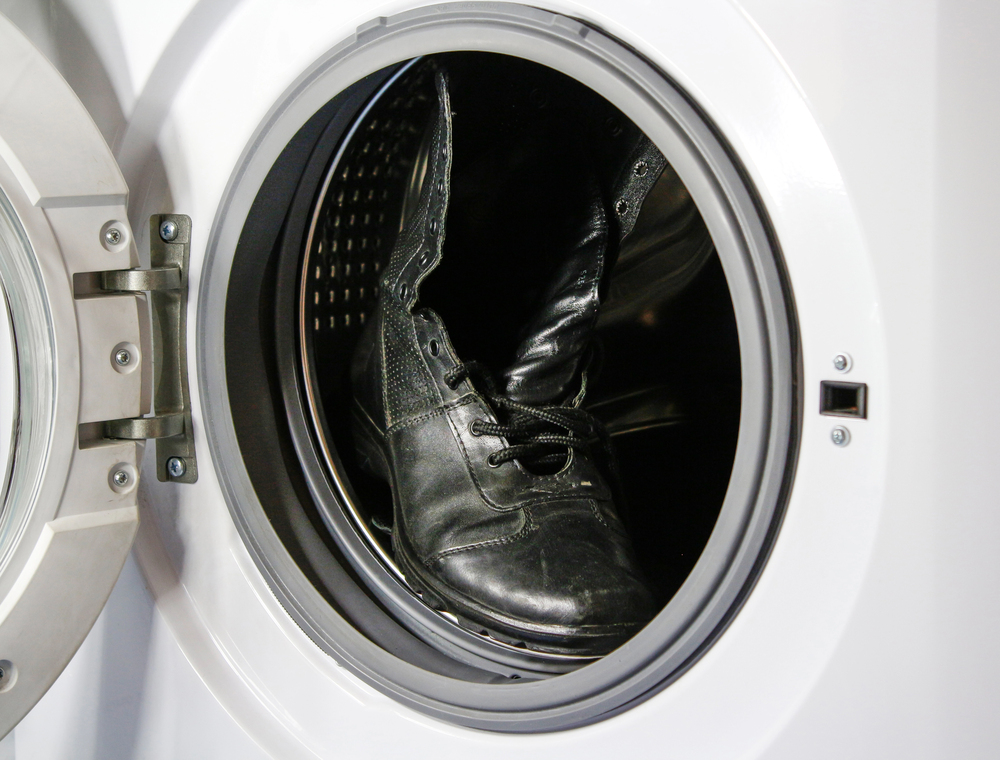
I thought this one was a no-brainer, but it’s a bit more complex than I realized.
You see, besides suede, apparently there are different types of leather (which I both knew… and didn’t know, ya know?).
And those different kinds of leather require different cleaning methods, methods that use special cleaners or shampoos and don’t require a washing machine.
Just be sure to check the care instructions for your item and follow them.
As for suede, you typically shouldn’t wash or dry-clean it. Just use something like this kit to maintain it.
Memory foam pillows and mattress toppers
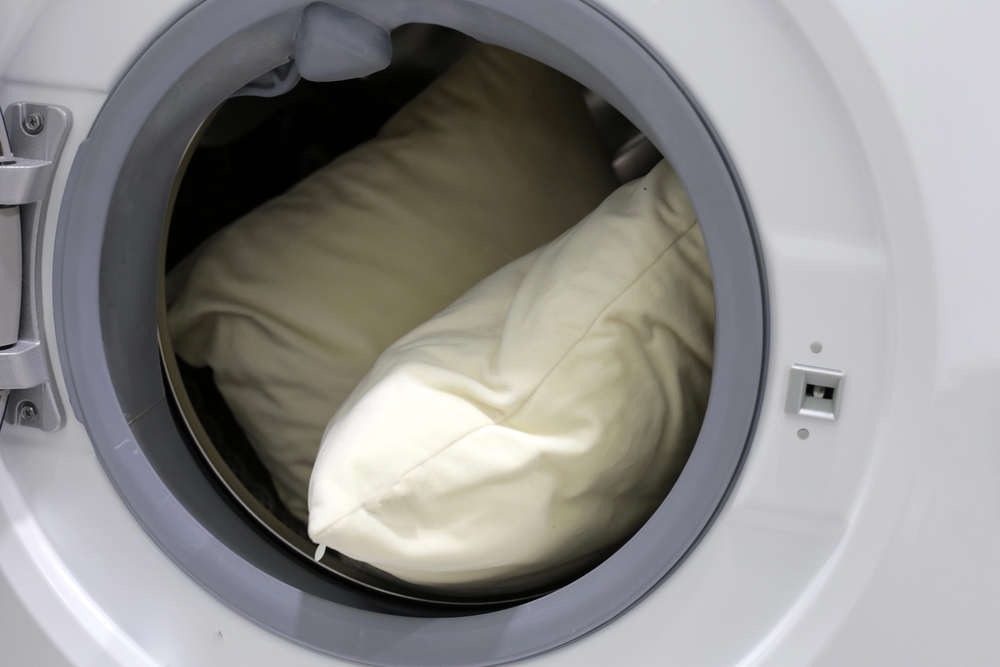
Umm, I have definitely not followed this rule, which explains why a certain pillow of my husband’s fell apart a few years ago.
Whoops…
Anyway, the lowdown is that anything memory foam (pillows or otherwise) should NOT be machine washed. Instead, spot-clean only or use baking soda as a deodorizer (sprinkle it on, let it sit, and vacuum it off).
Shredded memory foam is the only exception. You can sometimes hand-wash it in a tub of water, then leave it to dry in the sun or with a fan.
Nylons and tights
Truth be told, this one is a bit controversial.
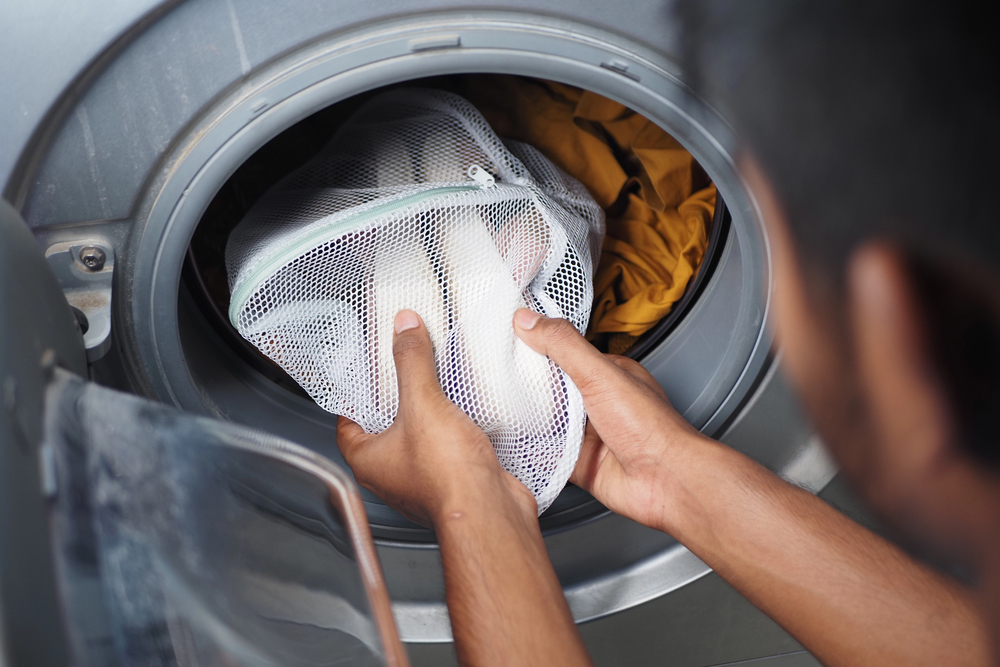
A number of internet people say you can wash nylons in the washing machine (and I kinda side with them on that).
However, Maytag points out that they typically last longer if you handwash them.
So, do with that information what you will.
I may handwash some of my nylons in the future to prevent pilling, but for the most part, I’ll probably still be throwing them in the washer.
Just be sure to use a mesh garment bag to protect them from snagging or stretching.
Some down sleeping bags
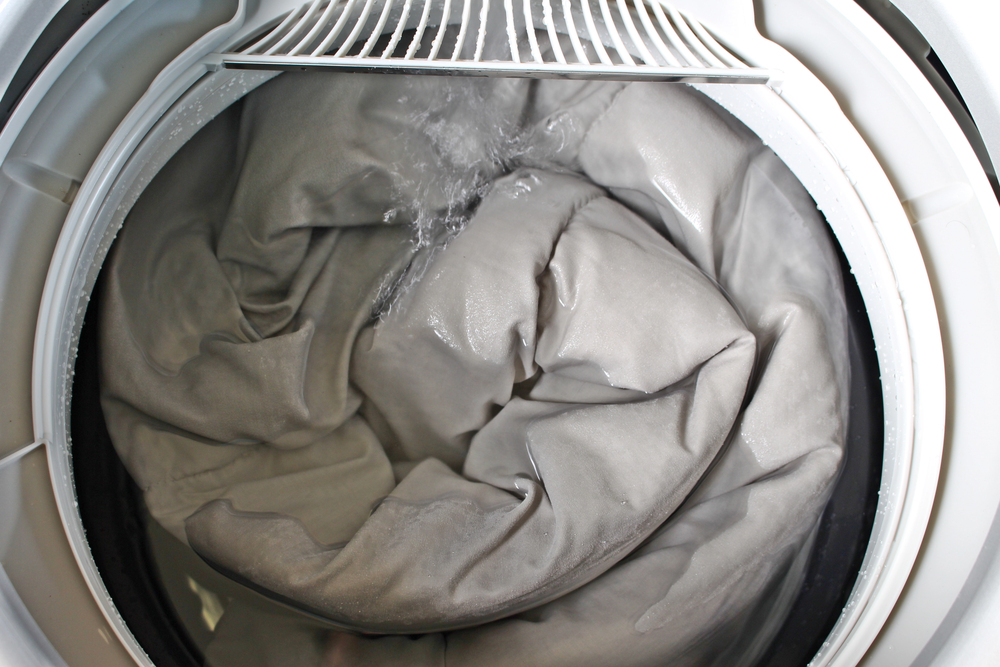
This is an interesting one.
You see, people safely machine-wash down coats all the time, but whether or not you can wash your down sleeping bag in the washing machine depends on a few things:
- First, whether or not it says it’s machine-washable. If it’s not, you likely need to handwash it per the label instructions (never dry-clean a sleeping bag).
- Second, check whether or not your washer is front-loading. You should NEVER put a down sleeping bag in a top-load washer with an agitator. It could tangle around the agitator and ruin the machine.
- Finally, the sleeping bag needs to fit in the washer with room to move around, and you need to be able to set it to a gentle cycle. Otherwise, you’re back to square one, and you’ve got to hand-wash it.
Super fun. And also a reminder to me to invest in a front-load washer when we’re in a house again. (We’re staying with family for now while my husband does some extended work training).
Shoes that aren’t canvas, cotton, or mesh
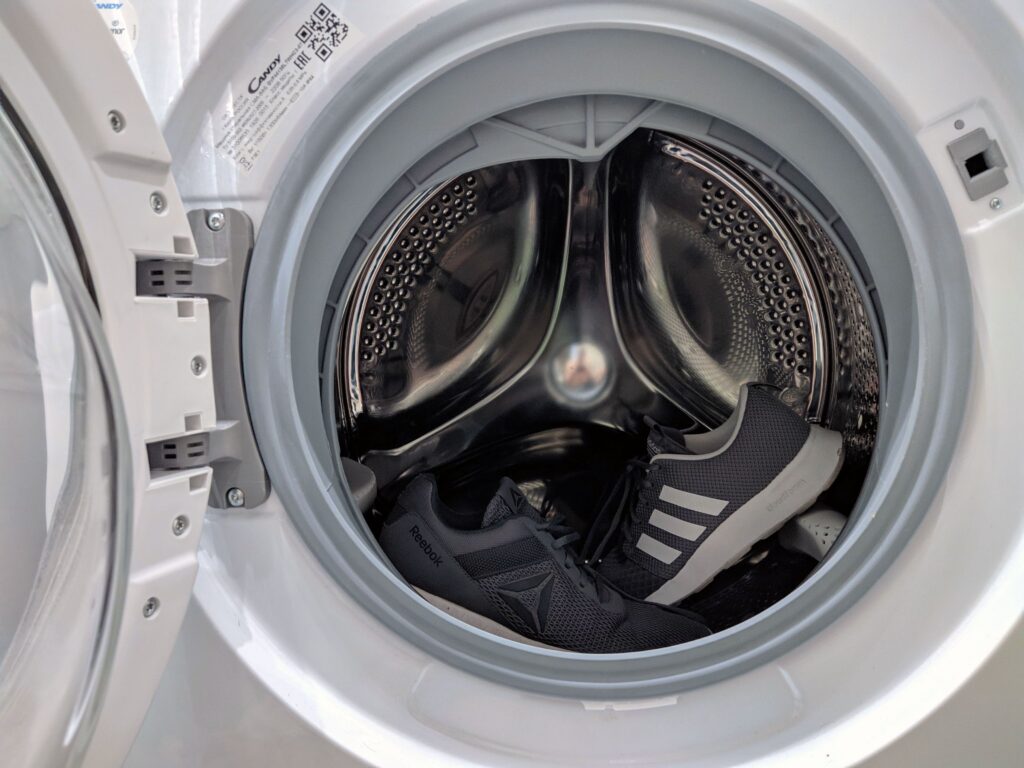
As the title here says, you can typically wash canvas, cotton, or mesh shoes. Many other shoes, though, shouldn’t be washed.
If they have leather, suede, or embellishments (like patches), don’t put them in the washing machine.
Other shoes (such as heels) can also be damaged by the machine’s movement.
Just check the label and use your good judgment. If you decide to wash them in the washing machine, remove any inserts or laces, put them in a garment bag, and run them on a cold, gentle cycle with a couple of towels for cushioning.
Oh, and never put them in the dryer because apparently that can wreck the glue (I wish I’d known that a year or two ago).
Silk, especially silk velvet
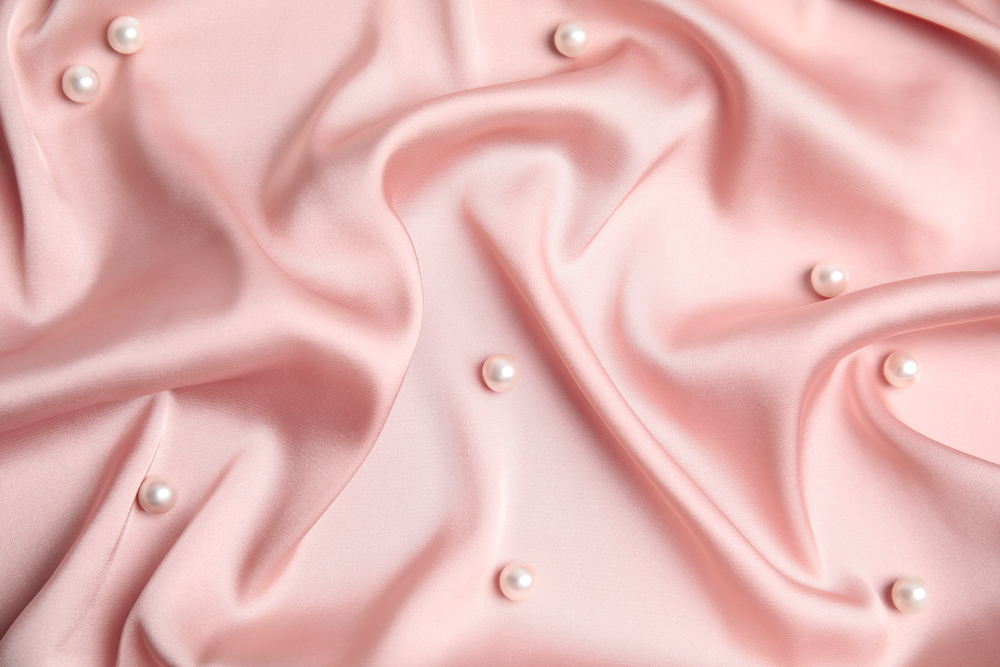
Full disclosure: Some silk CAN be machine-washed. But much of it can’t.
And even though some silks say they can be machine-washed on a gentle cycle, if you have any doubts about how gentle your cycle is… you should probably just hand wash it.
You see, silk fibers break more easily when wet. So a cycle that agitates the silk too much can cause snags or loss of shape.
And any kind of true silk velvet is an instant no-go for the washer. Washing machines can crush or permanently alter the way the fibers lay.
Rubber-backed rugs and mats
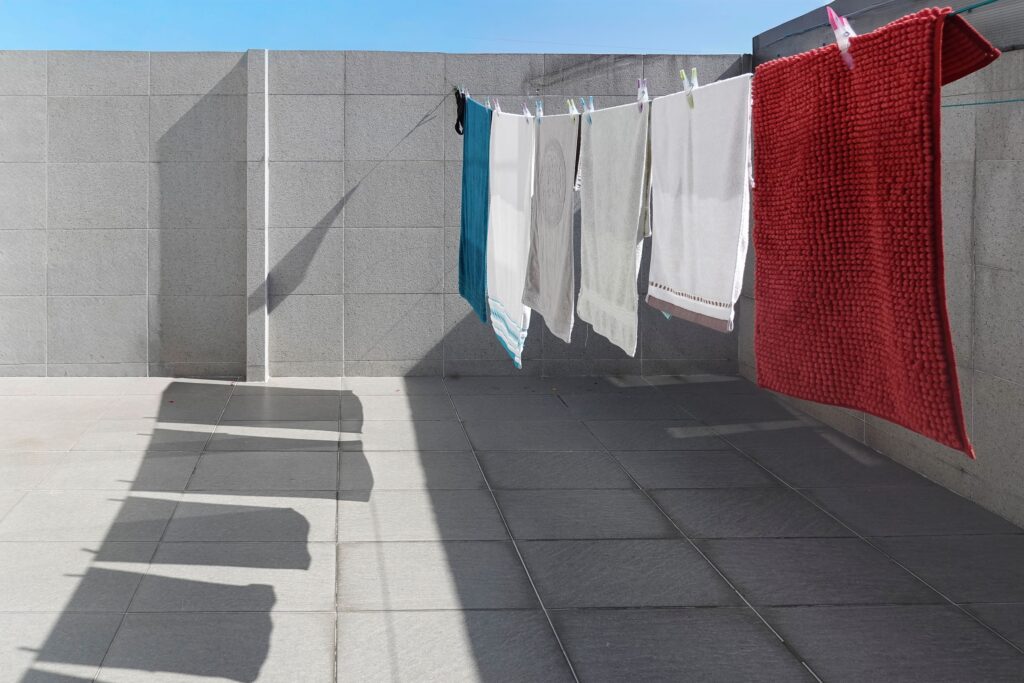
Okay, technically these are washable, but with a caveat: any standard rug bigger than a bathmat should go in a larger machine at the laundromat. Otherwise, the weight could ruin your home machine.
If you decide to wash smaller rugs, wash them in cold water and DO NOT tumble dry them.
Why, you might ask? Well, heat can destroy that useful, non-slip backing over time. Air drying is safer.
Super sandy or gritty items
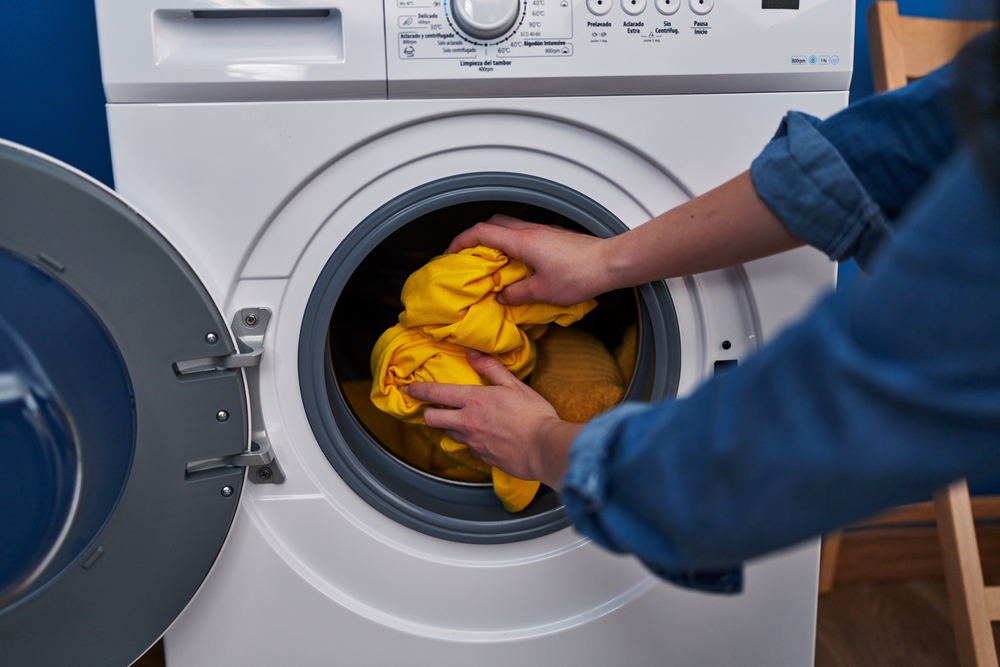
This one surprised me.
But apparently, you should pre-clean very sandy or dirty items because the granules can actually ruin your washing machine if they build up.
It makes sense, but it’s one more thing that’s easy to forget.
So, rinse stuff beforehand if you don’t want to buy a new washer prematurely!
Wool, cashmere, and hand-knits
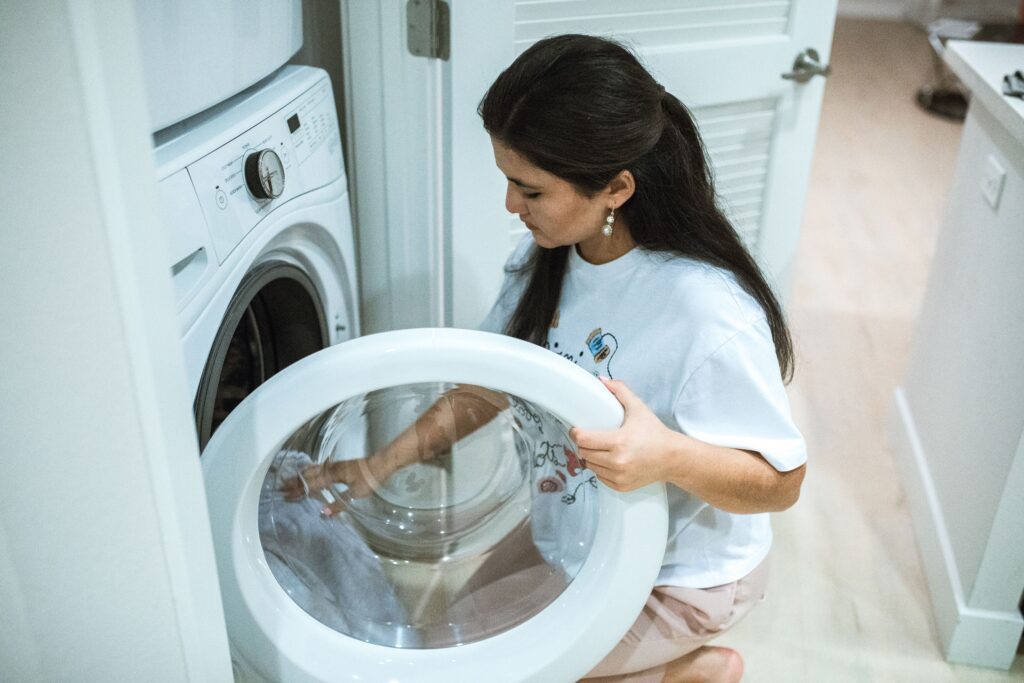
Whenever I see this on a “do not wash” list, I cringe slightly inside. Because truth be told, I have washed wool and hand-knit stuff before. And I honestly felt like it came out okay.
The caveat here, though, is that hand washing is technically the best way to protect the material from felting (balling up or getting little furry bits on it).
Plus, washing it in the washer can tempt you to put it in the dryer, which is a very bad idea. Drying wool in the dryer shrinks AND felts it, so avoid doing that.
The takeaway: Handwash wool and hand-knit items to best preserve them. If you don’t handwash, use a very gentle, cold cycle and always air-dry afterward.
Vintage and antique quilts
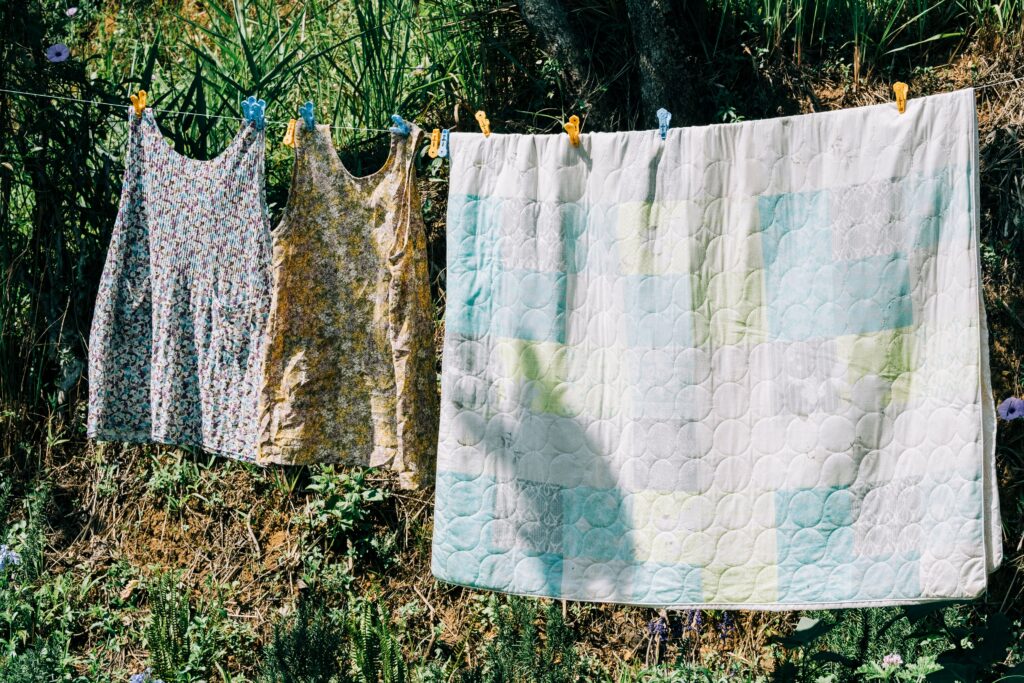
Do you have a quilt that Great Aunt Geraldine made 40 years ago? Are you tempted to wash it in the washing machine?
Well, apparently you shouldn’t.
Because according to the Missouri Quilt Company, any quilt older than 30 years should be hand-washed with Orvus paste (a super special soap that museums use).
And, when you do wash it, you should keep the following things in mind:
- Test the effects of water on each color in the quilt beforehand (you never know how vintage dyes will behave).
- Never wring out or twist the quilt to remove the water
- Always dry the quilt flat to prevent strain on the seams.
And there you have it. Great Aunt Geraldine would thank me for protecting her hard work.
Certain removable couch covers

When I read about this, my first thought is “Why make them removable if they’re not machine-washable?”
And the answer is probably, “Because there are other ways to clean them.”
And, as much as I wish that weren’t the case, it’s the truth.
Many removable couch cushion covers aren’t actually designed to go in the wash, so check your labels carefully. Anything that’s wool, leather, velvet, or simply labeled “dry clean only” is best kept out of your machine and cleaned elsewhere.
Some are even “spot clean only,” but you can remove them from the cushions for convenience.
Very hairy items
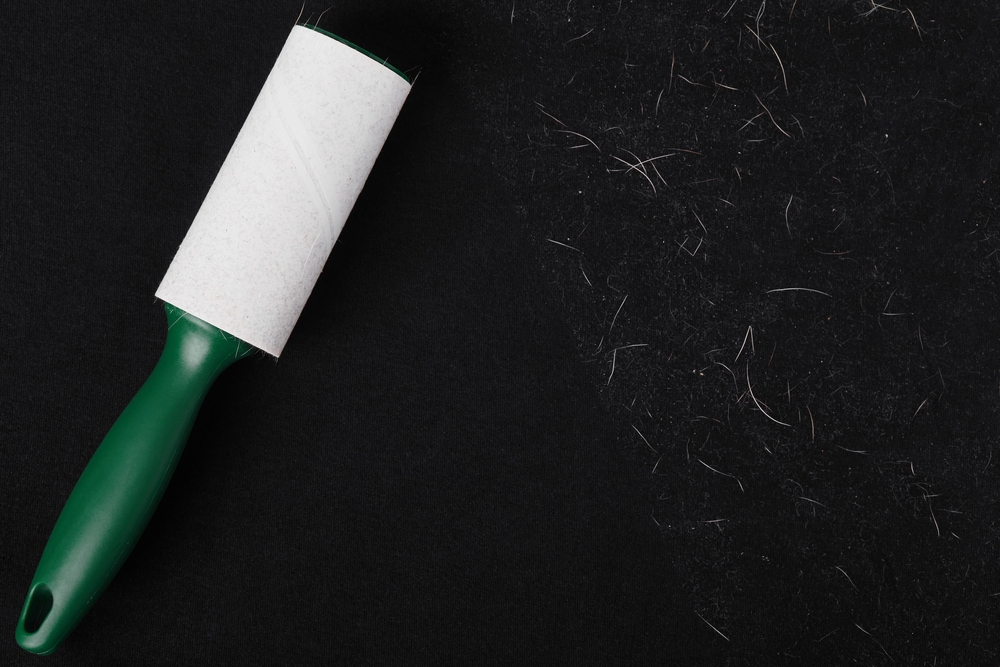
Does your dog leave you looking like a yeti when you snuggle?
I’ve never had this problem, but I know people with pets who have it. It turns out that chunks of furball need to be removed before clothes can go in the washer.
(Because, unfortunately, soggy pet hair clogs drains and ruins your washer over time.)
So how do you remove the hair beforehand? Well, Consumer Reports recommends using a bit of tape or a lint roller to collect hair.
Alternatively, you can run it through the dryer for 10 minutes with a dryer sheet (to reduce static) and let the hair collect in the lint trap.
Then you can wash like normal.
Extra embellished clothing
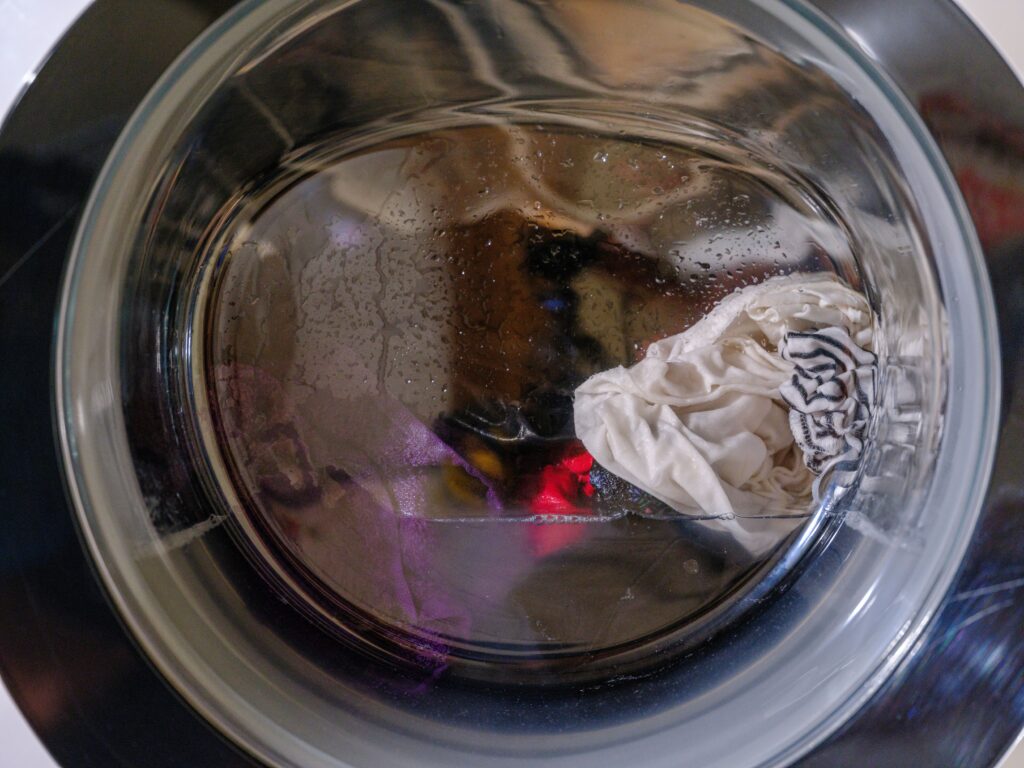
This one is pretty straightforward: if you have a piece with lots of sequins, glitter, embroidery, lace, etc., or more on it, it’s probably best to hand wash or dry clean it.
You can try a delicate cycle at your own risk, but experts recommend following the label and being extra gentle, just to be safe.
Some suits and blazers
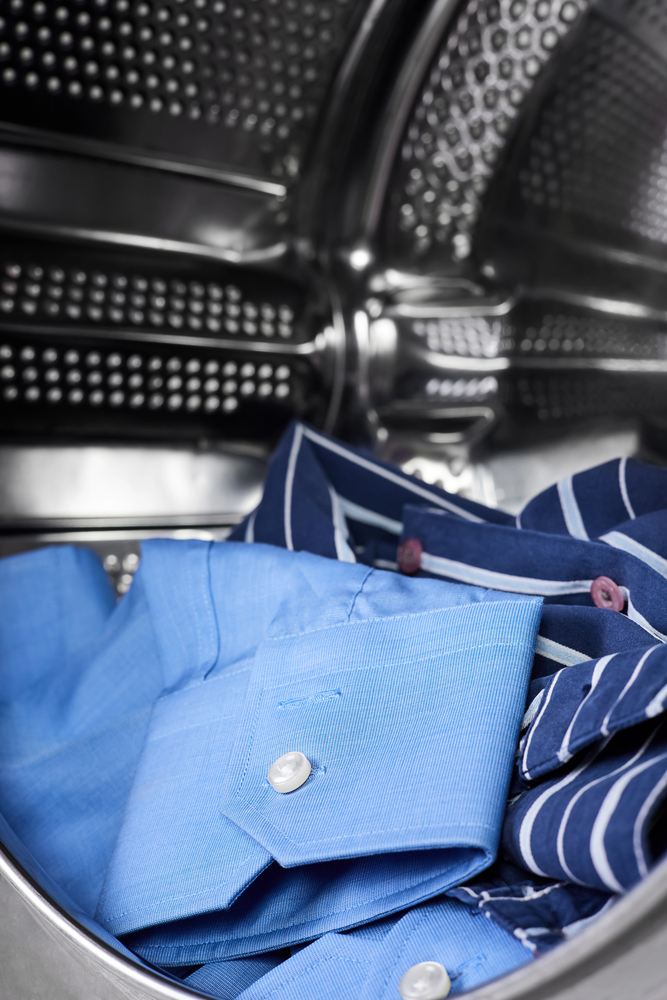
This one is pretty standard, but the line has blurred in recent years with the increase of machine-washable suits. (We got a nice one from Walmart just last year that was machine washable!)
The general rule, though, is that you don’t machine-wash any suits or blazers made of wool or silk. And you typically don’t machine-wash them when they have structured linings either. (Regardless of the material—it destroys the lining.)
If a suit is unlined polyester or cotton, check the label to be sure how to clean it. Some are machine washable, but many still require dry cleaning or hand washing only.
Real and faux fur
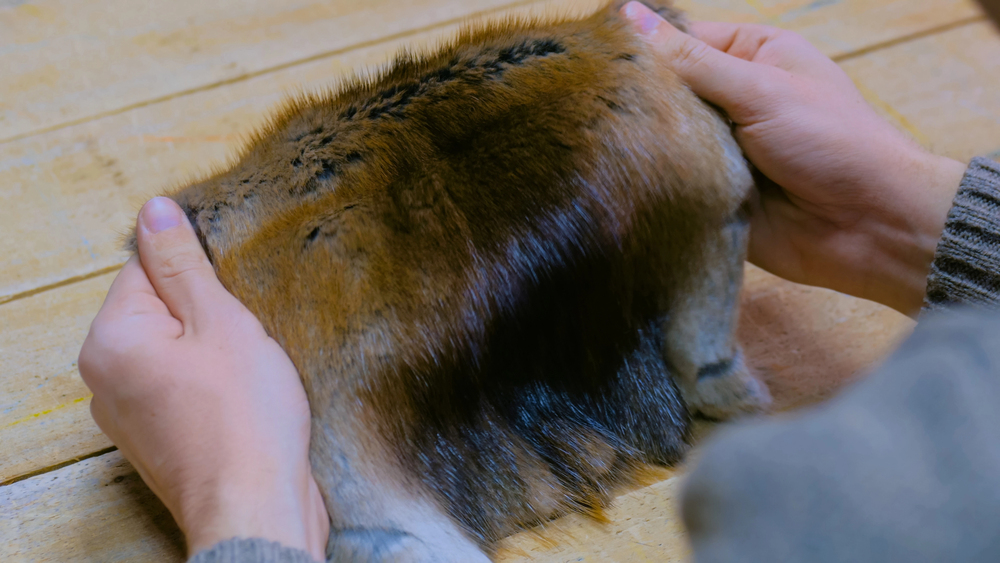
I did a deep dive on fur washing just for this article.
It’s complicated.
Basically, you should know that faux fur is best hand-washed, because putting it in the washer or dryer can mat or damage the fibers.
However, there can be exceptions if the label says so and you trust your delicate cycle to be extra gentle.
When it comes to real fur, though, the consensus is that it should absolutely never (and I mean NEVER) go in the washing machine.
Anything with vomit on it
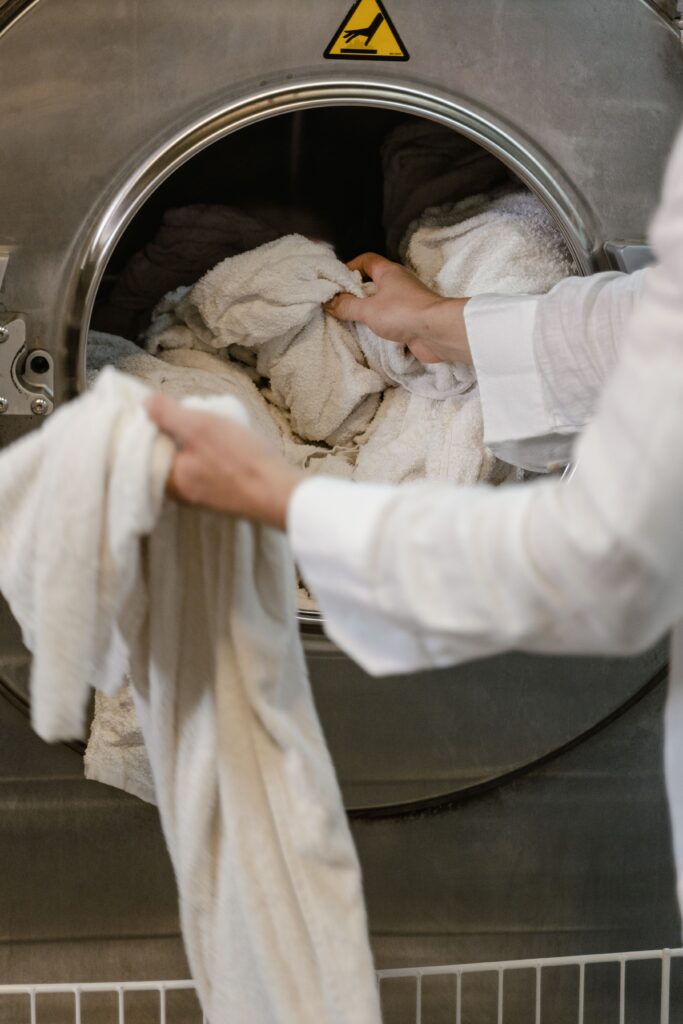
Oddly enough, this was one of the most surprising points for me.
It turns out that vomit is bad for your washing machine. The chunks can clog drains and interfere with your machine’s function.
I mean, i makes sense; it’s just not something we really think about.
So now you may be wondering… how do you wash little Johnny’s puke-covered sheets?
Well, the best thing to do is use a utility sink to remove the bulk of the vomit, then launder like normal.
Super fun! But maybe you’ll thank me if I save your washing machine from failing.
Wax and lipstick stains (at least initially)
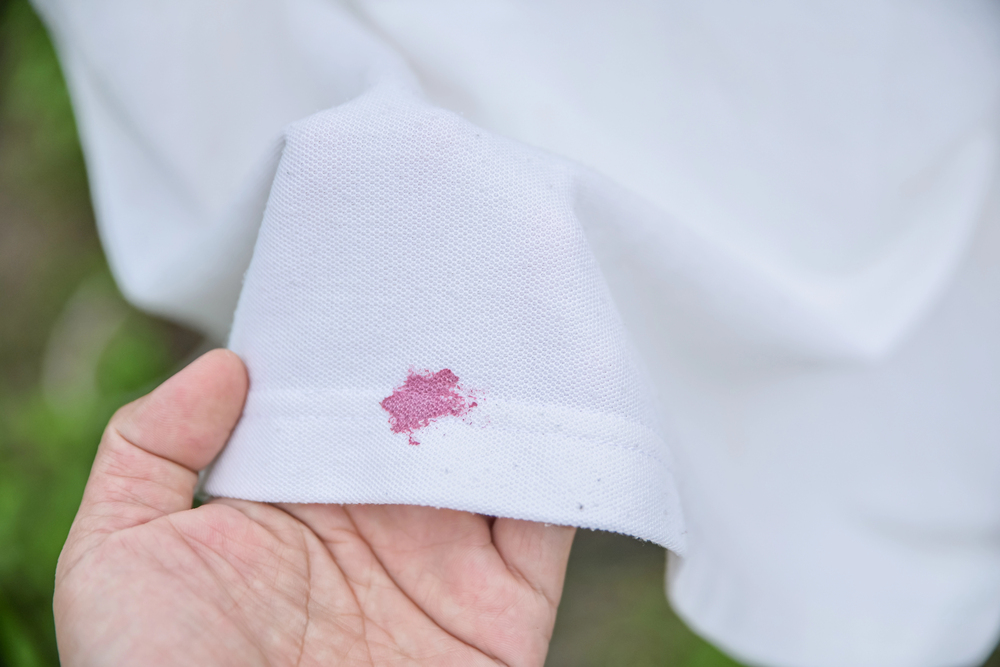
Have you ever tried to launder a piece of clothing with lipstick on it? (Or worse, accidentally washed an entire tube?)
Thankfully, I haven’t. But I’ve heard horror stories.
Basically, wax and lipstick (which contains wax) melt at warm temperatures and spread, so they can be pretty gnarly in a washing machine if you’re not careful.
The trick, however, is to remove any excess wax or lipstick first, pretreat it with a degreaser (like Dawn or an enzyme-based laundry detergent) for the oils, and then launder while it’s still damp.
Stick around for this last one; it’s important!
Car seat harness straps and some covers
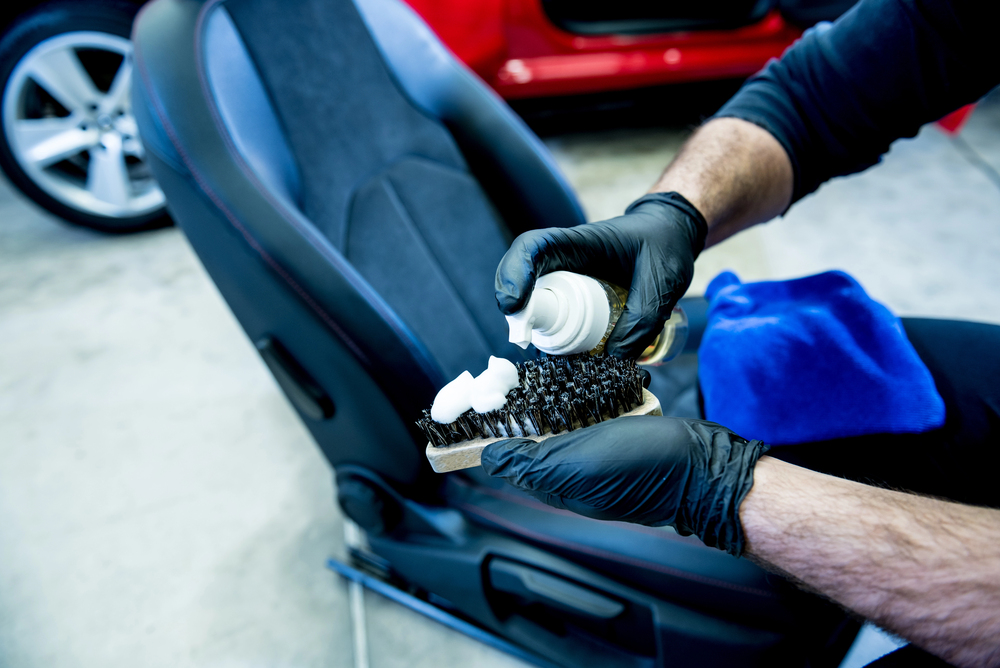
I didn’t know this one for a long time, but you’re never supposed to submerge or machine wash the straps for your child’s carseat. It can damage the plastic and metal and prevent them from functioning correctly in an accident.
That’s a pretty scary thought!
As for covers, check your car seat’s manual. Many covers can be machine-washed, but only on a gentle cycle. Then they have to be air-dried.
Certain brands or models (such as select Britax or older Clek models) are hand-wash only, though, so do your research.
Be sure to check labels and protect your possessions
Well, we’ve finally come to the end. Thanks for sticking with me through all that! I hope you learned something useful.
My main takeaway from this article is: “When in doubt, check the label.” That way you don’t accidentally launder something dreadful.
Oh, and assume that natural fibers are delicate or hand-wash only.
Anyway, let me know your most disastrous washing experiences down below, and don’t forget to check out my list of unusual but smart ways to use Windex! <3