

Have you ever wished for a time machine?
I certainly have. It sounds great to be able to take a trip to the future to see how things turn out with my parenting. And, it’d be nice to take a ride into the past to keep myself from making dumb choices.
Unfortunately, though, we don’t have time machines.
(At least not yet, haha.)
What we do have, though, is the experiences and research of millions upon millions of people. And when it comes to parenting, it pays to know what works—and what doesn’t—in the long run.
So, thanks to modern science, here are some of the parenting shortcuts to avoid that future you would probably like you to know.
Overparenting

This is pretty cut and dry. Kids and teens need to be allowed some control and autonomy over their lives so that they can learn how to manage themselves as adults.
I’m not saying you should let your 4-year-old mow the lawn or your 13-year-old be in charge of paying all the family’s bills (neither of those is a good idea).
But, you should give your kids age-appropriate responsibilities so that they know you trust them and so that they learn to trust themselves.
Let your 4-year-old learn to make peanut butter sandwiches and give your 13-year-old a chance to make meals and track their schedule!
Studies back up this up; adults who were overparented and not given the chance to learn independence as kids are negatively affected psychologically, socially, academically, and behaviorally.
If you want to learn more about giving children and teenagers appropriate responsibility, check out this book. (It’s given me great guidance on this front!)
Using television and social media as a babysitter

It’s so easy to plop little ones in front of the TV or to tell our tweens “sure, get on social media.” Everyone does it.
But . . . do we all know the long-term consequences?
In his book “Glow Kids”, Dr. Nicholas Kardaras makes the argument that screens are as addictive as cocaine and that technology arguably causes or majorly augments ADHD symptoms.
Additionally, social media is becoming increasingly polarized as algorithms create personal echo chambers, reinforcing our own worldviews and blocking out differences of opinion.
TV shouldn’t be a babysitter, and social media can’t be our kid’s teacher—we need to take those responsibilities on as parents, guardians, and grandparents.
I should add that I’m not saying to be extreme. My kids do watch some movies and we do get online; but I am just saying that we should be careful and have limits.
If you want to learn more about the cleated footprint that technology can leave on our parenting, check out this article.
Using discipline to punish instead of teach
Kids aren’t robots. They don’t always perfectly do what we want or need, and they certainly make plenty of mistakes.
Sometimes, though, parents fall into the trap of expecting their kids to perform like a well-oiled machine—and they punish them if they slip up.
This practice of parenting is known as authoritarian parenting, and (according to this study on the NIH website) it’s the establishment of “strict rules” that “are rarely explained” and the expectation of “high standards without making mistakes.”
Mistakes are usually met with punishment.
This parenting style is tied to negative social outcomes, low self-esteem, and aggression issues long-term.
Healthy, or authoritative parenting, involves setting “clear expectations and guidelines and explain[ing] the reasoning behind . . . disciplinary actions.”
Discipline in authoritative parenting is primarily used as a tool to teach, and this methodology is tied to increased self-confidence, responsibility, and better self-regulation long-term.
I think the key here is that the goal for consequences shouldn’t be to make kids feel bad; the goal should be showing kids the logical results of their actions and helping them know what better course of action they should take next time.
In the real world, this might look like having your kid or teen actually clean up the mess they made (instead of just dumping them in time out or taking away their phone privileges for a day).
Doing it Yourself (Instead of having them do it)
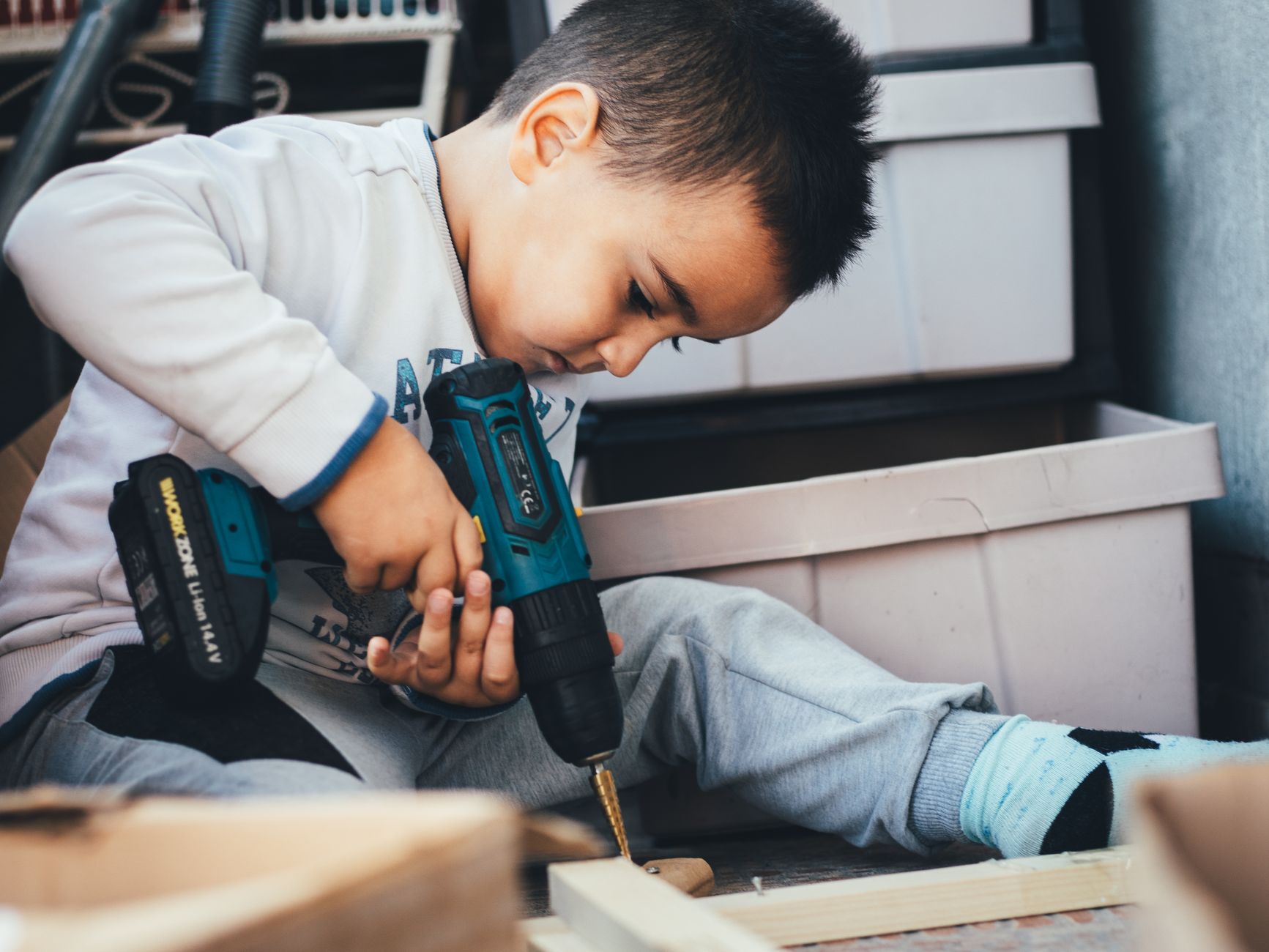
Anyone who’s watched kids for more than 20 minutes knows that getting kids to do stuff they don’t want to do is hard.
But you know what’s harder?
(Or at least what I imagine would be harder.)
Having a grown adult child who doesn’t know how to do things for himself or herself and who expects others to do everything for them!
I mean . . . hello basement dweller!
Kids need to do get used to doing boring or hard things like chores, homework, and more, because those are basically the things they’ll need to do all the time as grownups.
Plus, in the long run, it’ll make your job way easier because you’ll have kids who are responsible for themselves and their work.
Overreacting

This is another easy one to do under stress. But overreacting to little and big kids alike can cause two things to happen:
- You may accidentally reinforce the negative behavior by paying too much attention to it (Been there, seen that with toddlers—a simple “No, we don’t do that” and perhaps the giving of an apology followed by redirection work way better than freaking out).
- You may jump into punishments that are too extreme.
As previously mentioned, authoritative parenting discipline should be partnered with reason—it’s there as a tool, not as a punishment. This fosters confidence, responsibility, and self-regulation in kids over time.
Unreasonable punishments for trespassing on unclear boundaries (more about that below) leads to lower self-esteem, rebellion, and socializing issues.
So yes; healthy parenting requires that you not throw out harsh punishments in the heat of the moment. Instead, take the time to evaluate what a helpful form of discipline could be.
How can you use your discipline to truly teach?
Lecturing (instead of communicating)

We all know lecturing doesn’t really work that well.
How many movies have we seen with teenagers rolling their eyes or acting annoyed at parents who constantly tell them what they’re doing wrong?
I mean, who doesn’t dislike constant lecturing?
As a parent or grandparent it can be so easy to slip into lecturing mode since we just want to tell our kids or grandkids what they’re doing wrong.
But, according to this PubMed study from 2019, the best way to help kids and teens is to communicate in an autonomy-supportive way. This means you’re not commanding them—you’re talking with them and explaining why a choice may not be the smartest one, while also hearing out their opinions.
This form of teaching as a parent takes much more effort than just lecturing—but it also fosters a connection between you and your child that will benefit you both long-term.
Not following through

Research suggests that consistency is key in parenting. And, while it’s sometimes easier to hope your child forgets about something you said you’d do, it’s better for your kid if you do it.
Lack of consistency is tied to marked differences in brain development and leads to greater levels of anxiety later in life.
So, be consistent! Do what you say you will do.
(Easier said than done, I know, but I believe in you!)
Buying everything for you kids

I recently watched a short from Dave Ramsey about a couple who had started applying his financial advice at the ages of 14 and 15. They had a paid-off house at 23 and 24, freeing them to invest for the rest of their lives and retire with generational wealth.
Crazy. And cool.
In this case, their parents weren’t the ones teaching them financial literacy, but studies show that parents are typically the ones who give their kids an education about money.
And, the data says that hands-on experience and work opportunities are the best teachers.
So, put in the effort to help your kids learn about money! It’s certainly more work than the “I’ll just get my kids what they need and they’ll figure it out in college” mindset, but it pays off in the long run.
I personally love The Total Money Makeover (it’s changed my life) and highly recommend it as a starting point if you need to get a better handle on your finances before teaching your kids.
Also, if you want some good additional resources, The US Consumer Financial Protection Bureau has some fun and free financial teaching materials for kids and teens.
Using *your* phone as a brain break from your kids

This is an easy one to fall into. We all like having a brain break on our phones.
But earlier this year I heard Ashley from GlowbodyPT compare phone use to a pacifier for adults, and I can’t get the image out of my mind.
The truth is that parental (or otherwise) use of tech can be just as damaging as having your children use media. In fact, frequent parental phone use in the presence of kids is tied to increased anger, sadness, and lower well-being in children.
You can bet it’s not great for teens either.
So get off your phones! At least when you’re with your kids or grandkids. There are plenty of other times to google stuff or watch interesting YouTube videos.
Lying

As a child, I was always bothered by caregivers lying to their kids. It just seemed wrong to me.
As an adult I realize that those caregivers probably didn’t realize that we all knew they were lying.
And as a parent, there are times when it is tempting to use white lies when my kids ask difficult questions.
But the truth is, kids do notice when we’re lying, and it hurts our relationship. It also makes children more likely to lie long-term.
Instead of using white lies to answer hard questions, be honest in an age-appropriate way. Sometimes this will mean saying “I don’t know the answer right now,” or “I’ll have to think about that and get back to you.”
But long-term, this will teach your kids that they can depend on and trust you.
Overemphasizing perfection

An unfortunate aspect of our society is that it seems to be obsessed with being the best—the best dressed, the best in school, the best looking, the best at sports, etc.
I personally think social media makes this all way worse, though that’s probably a conversation for another time.
But all too often, we as parents take the bait and want our kids to be the “best” at stuff.
But our kids shouldn’t be worried about being the best. In fact, overemphasizing perfectionism is tied to less creativity, greater anxiety, and lower self-esteem.
If we want our kids to be great, we can’t tell them to be great.
We have to tell them to enjoy trying new things, to make mistakes and have fun with the process, and be okay with not being the best.
Over time, this will lead to the development of what’s called a growth mindset—which in turn leads to greater success in life.
Not taking the time to validate feelings

Before I delve into this, I think it’s important to share the definition of emotional validation given in this study from Sungkyunkwan University in South Korea:
“The acceptance of emotions without judgment.”
I’ll be honest; before writing this post, I hadn’t ever given much thought to the definition of emotional validation. But I love how it says, “without judgment.”
It takes effort to validate your kid’s or teen’s feelings. Obviously, it’d be way easier to just stay in our own shoes and say, “What you feel doesn’t matter.”
But emotional validation is needed for kids. It actually builds persistence.
In fact, preschoolers who are told that their feelings are important are more likely to not give up in challenging circumstances. I would guess there are benefits for older children and adolescents as well.
Assuming they’ll “figure it out”
Okay, this lies on the opposite end of overparenting—and you need a balance.
As we already established, rushing to your child’s side every time they have a problem robs them of the chance to learn.
But also, failing to teach your children and teens how to perform basic, life tasks is a form of neglect (in my opinion).
Every kid should know how to do laundry, cook meals, and budget by the time they head off to college! It’s just part of being a happy, productive adult.
It takes a lot of patience, but it’s important (and worth it).
And once they know how to do tasks, there will be chances to practice problem-solving along the way.
For more guidance on when and how to teach skills to your kids, check out this book and take a look at my post of important things to teach your daughter (a lot of it applies to sons too).
Not setting clear boundaries in advance

Have you ever noticed kids typically behave way better if they know expectations in advance? (At least my kids do!).
I think that sometimes parents assume that their kids are just mischievous. But I think far too often, they just don’t know what the rules are before they get into a situation.
So, before your littles go with you to the park or your teen goes over to a friend’s house for a party, talk about what to expect. Set boundaries so they know what they should and shouldn’t do.
And, consider your family culture. The culture and values we create as parents often help boundaries to be discussed long before they are ever needed, which can be of great help to our children.
Focusing too much on the future

This is more about us as parents than about our kids. But, I feel like remembering this helps me to be a better parent now (rather than looking back and regretting it later).
Sometimes we get all in our heads about how we’re just excited for the next phase and we can’t wait for our littles or teens to grow up and be more mature.
But thinking like that keeps us from pouring our best selves into the now that needs us.
I think far too many of us will one day reach a point in our lives where we realize that the worst parenting shortcut we ever took was checking out and waiting for it to be over.
It is hard work. But don’t give up. I believe in you.
Keep going, and let me know down below about the parenting shortcuts you wish you hadn’t taken and what to do instead!